A Question to Ponder
Most people answer too quickly.
Ask someone a simple question:
Which is easier: for the poorest man to give all that he has to the richest man, or for the richest man to give all that he has to the poorest man?
The answers usually come immediately. Some say the poor man has little to give, so his sacrifice is small. Others say the rich man has much to give, so his sacrifice is greater. Almost everyone begins calculating dollars, possessions, and material wealth.
Yet this reveals something interesting. The question was never truly about money.
The moment we hear the words rich and poor, our minds instinctively assign value based upon possessions. We assume that wealth determines sacrifice. We begin measuring bank accounts before we have even considered the nature of the gift itself. In doing so, we may unintentionally miss the deeper question hidden beneath the surface.
What if wealth has very little to do with the answer?
To explore this, imagine a different scenario.
Far out in the largest ocean on earth sails the most magnificent cruise ship ever constructed. Every luxury known to mankind is aboard. The owner of the vessel possesses immense wealth, influence, and power. On the same ocean, separated by vast distances from civilization, a poor man has spent twenty years stranded upon a deserted island. Through relentless perseverance, he has finally built a crude and tattered floating craft capable of carrying him home.
By extraordinary circumstance, the two men meet in the middle of the sea.
At that very moment, the great cruise ship begins to sink.
The rich man sees the poor man’s fragile vessel floating safely upon the water. Desperate to survive, he offers the poor man everything he owns. The ship, the wealth, the treasures, the fortunes of generations—all of it—in exchange for the small craft.
Who now has the harder thing to give away?
Most would still be tempted to answer according to wealth. Yet a closer examination reveals that the rich man’s possessions are losing value by the second. The ship is sinking. His wealth is becoming inaccessible. His treasures cannot keep him afloat.
Meanwhile, the poor man’s ragged craft has become the most valuable object in the world.
Why?
Because it carries something wealth cannot purchase in that moment: survival.
The categories have suddenly reversed.
The rich man possesses everything except what he needs.
The poor man possesses almost nothing except what he needs.
At this point, the labels “rich” and “poor” begin to lose their meaning.
The question becomes even more profound if we continue.
Suppose both men are followers of Christ.
Suppose the poor man remembers the words:
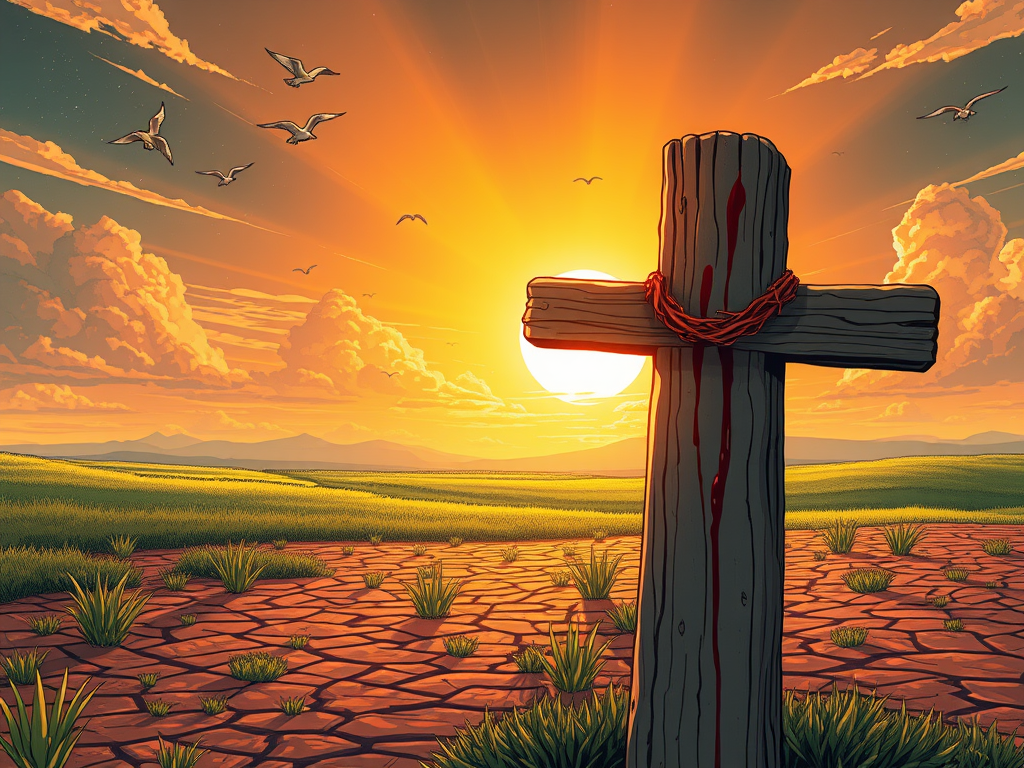
“Greater love hath no man than this, that a man lay down his life for his friends.”
— John 15:13
Knowing that only one man can survive, the poor man willingly gives his craft to the rich man. He surrenders the only means of reaching home and knowingly descends into the sea.
Now who has given more?
The answer no longer rests in wealth, poverty, possessions, or status.
The poor man has surrendered his future.
He has surrendered every possibility that tomorrow might bring.
He has surrendered his own life.
Whether viewed through theology, philosophy, biology, or simple logic, life itself remains the highest possession a human being can relinquish. Every other possession depends upon it. Wealth can be regained. Houses can be rebuilt. Ships can be replaced. Lost fortunes can be earned again.
A life surrendered cannot be reclaimed by human effort.
This realization exposes a hidden assumption within the original question.
Why do we immediately divide humanity into rich and poor?
Why do we instinctively measure people according to possessions?
Why is a man not simply a man?
The answer may lie in our tendency to see outward distinctions before inward realities. We identify one man by abundance and another by scarcity. We classify, compare, rank, and evaluate. Yet circumstances are often temporary. The wealthy can become destitute. The poor can become prosperous. Health can vanish. Strength can fade. Empires can collapse.
What remains beneath those changing conditions is something far more fundamental.
A human being.
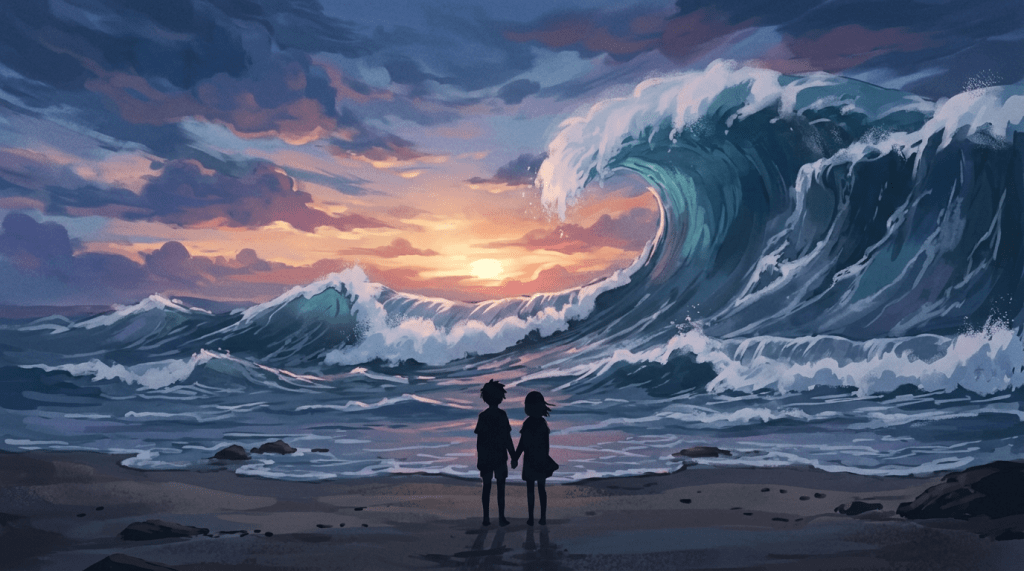
The sea offers a useful lesson here. Out upon the open ocean, nature recognizes neither wealth nor poverty. The waves do not care about titles. The wind does not acknowledge bank accounts. The storm does not respect social status.
Before the sea, there are not rich men and poor men.
There are only men.
One breathes.
One struggles.
One survives.
One perishes.
The distinctions we cherish on land often disappear when measured against the realities of existence itself.
Perhaps this is why so many philosophical and theological traditions eventually arrive at the same conclusion. Wealth and poverty are circumstances. Humanity is essence.
The rich man and the poor man both entered the world with nothing.
The rich man and the poor man will both leave it behind.
Every possession, title, accomplishment, and fortune ultimately belongs to the realm of temporary things.
Life itself occupies a different category.
This is why the original question proves so difficult when examined carefully. It is not really a question about generosity. It is not even a question about wealth.
It is a question about attachment.
A poor man may cling to his possessions as fiercely as a king clings to his kingdom.
A rich man may release great wealth more easily than another man releases a single treasured object.
The weight of a gift is not determined by the market value of the thing surrendered.
It is determined by the significance of what is relinquished.
When all superficial distinctions are stripped away, the deepest question becomes remarkably simple:
What is the most difficult thing a human being can give away?
The answer is not wealth.
It is not status.
It is not power.
It is not comfort.
It is the self.
And perhaps that is why the greatest examples of sacrifice throughout history are remembered not because of what people owned, but because of what they were willing to surrender for another.
In the end, the rich man and the poor man may not be opposites at all.
They are simply two men standing before the same question.
What, if anything, are you unwilling to let go?—




Leave a comment