
Understand John 1:13
The mystery of the incarnation is one of the most profound truths in Scripture. The Gospel of John reveals this truth with clarity, emphasizing that Jesus was not born through ordinary human means, but by the sovereign will of God.
John 1:13 states:
“Who were born, not of blood, nor of the will of the flesh, nor of the will of man, but of God.” (John 1:13, KJV)
This verse directly follows the powerful declaration of John 1:12, where it is revealed that those who receive Christ and believe in His name are given the right to become children of God. However, John 1:13 extends beyond mere human adoption into God’s family—it foreshadows the divine origin of Jesus Himself.
Jesus was not conceived in the way that all other humans are. He was not the result of human decision, desire, or natural procreation. He was entirely divine in His incarnation. The Word became flesh (John 1:14), not by biological process but by supernatural decree.
Let’s explore the fullness of this truth, using Scripture to deepen our understanding.
Not of Blood
John states that Jesus was not “born of blood.” In Jewish thought, lineage was often traced through the bloodline, whether from the father or mother. However, Jesus’ birth did not come through the mixing of human bloodlines.
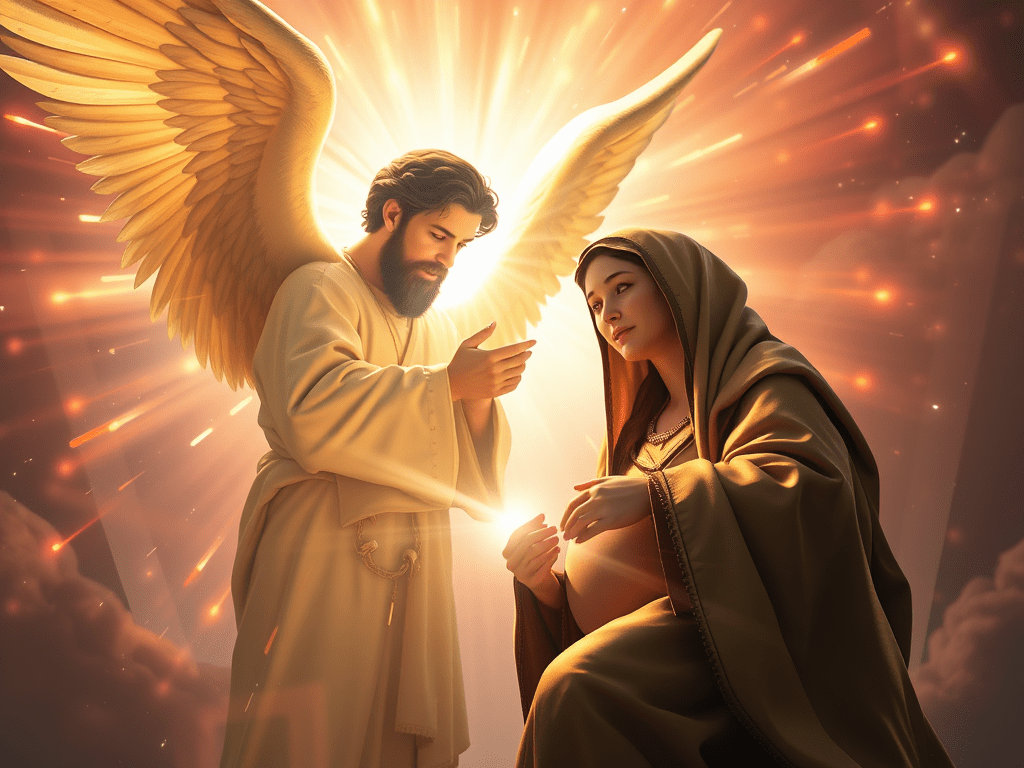
The angel Gabriel announced this supernatural birth to Mary:
“The Holy Ghost shall come upon thee, and the power of the Highest shall overshadow thee: therefore also that holy thing which shall be born of thee shall be called the Son of God.” (Luke 1:35, KJV)
This is a clear statement that Jesus’ conception bypassed human bloodlines. There was no earthly father contributing to His existence. His being was fully divine, and yet, by the will of God, He took on human flesh.
Paul echoes this mystery in Philippians 2:6-7:
“Who, being in the form of God, thought it not robbery to be equal with God: But made himself of no reputation, and took upon him the form of a servant, and was made in the likeness of men.” (KJV)
Though fully divine, Jesus willingly took on flesh. But that flesh was not the product of human blood—it was a holy, set-apart incarnation through the Spirit of God.
Not of the Will of the Flesh
The phrase “nor of the will of the flesh” directly opposes the natural reproductive instincts of mankind. Human conception, in its normal sense, arises from the desires and actions of the flesh. But Jesus’ birth was untouched by such impulses.
Isaiah prophesied this miraculous event centuries before:
“Behold, a virgin shall conceive, and bear a son, and shall call his name Immanuel.” (Isaiah 7:14, KJV)
The virgin birth ensures that no human desire, no fleshly passion, played any role in the conception of Jesus. His coming was not from human instinct, but from divine purpose.
This is why Jesus could later declare:
“I am from above: ye are of this world; I am not of this world.” (John 8:23, KJV)
From the moment of His incarnation, Jesus was never “of this world” in origin. He entered into it, but His beginning was not in the flesh—it was in the eternal decree of God.
Not of the Will of Man
The final phrase in John 1:13, “nor of the will of man,” dispels the idea that Jesus’ coming was a result of any human plan, arrangement, or decree. Earthly kings are born through dynastic succession, arranged marriages, and political ambitions. But Christ’s birth was not subject to human control.
Paul clarifies this in Galatians 4:4:
“But when the fulness of the time was come, God sent forth his Son, made of a woman, made under the law.” (KJV)
It was God who sent His Son—not by the will of any human leader or nation, but by divine orchestration at the perfect time in history.
Even Mary herself had no initiative in this. When Gabriel told her she would conceive, she was stunned, saying:
“How shall this be, seeing I know not a man?” (Luke 1:34, KJV)
Her response shows that Jesus’ birth was completely beyond human planning. It was not of man’s will—it was the direct action of God.
Will of the Father
The final phrase in John 1:13 confirms that Jesus’ birth was solely and entirely from the will of God. This is the key theological distinction between Jesus and every other human being. We are born into sin, under Adam’s fallen nature (Romans 5:12). But Jesus, being born of God, carried no sinful nature.
Hebrews 10:5 declares:
“Wherefore when he cometh into the world, he saith, Sacrifice and offering thou wouldest not, but a body hast thou prepared me.” (KJV)
His body was not like ours in its origin—it was divinely prepared by God.
And yet, in taking on flesh, He willingly took the form of a servant:
“For even the Son of man came not to be ministered unto, but to minister, and to give his life a ransom for many.” (Mark 10:45, KJV)
He who was fully God became fully man, yet without sin (Hebrews 4:15). The incarnation was not a reduction of His deity, but an addition of humanity, allowing Him to fulfill His mission as Savior.
Divine Servant
The profound truth of John 1:13 is this: Jesus Christ is 100% divine. He was never a product of human effort, nor subject to human corruption. From conception to birth to His earthly life, He remained fully God, clothed in human flesh.
- He was not born of blood – no human lineage dictated His coming.
- He was not born of the flesh – no human impulse played a part.
- He was not born of man’s will – no earthly plan brought Him forth.
- He was born of God – entirely divine in origin, purpose, and power.
And yet, He laid aside His divine privileges and became a servant (Philippians 2:7), walking among us, suffering with us, and ultimately dying for us. He did not come to establish an earthly kingdom, but a heavenly one—one that we are invited to be a part of, not by human means, but by faith in His name (John 1:12).
May we never forget the mystery and wonder of the incarnation. The Word became flesh, not by blood, not by flesh, not by man—but by God Himself.
Jesus Christ: fully divine, fully incarnate, fully our Savior.




Leave a reply to Jesus is God is Spirit – Silent Truths Cancel reply