
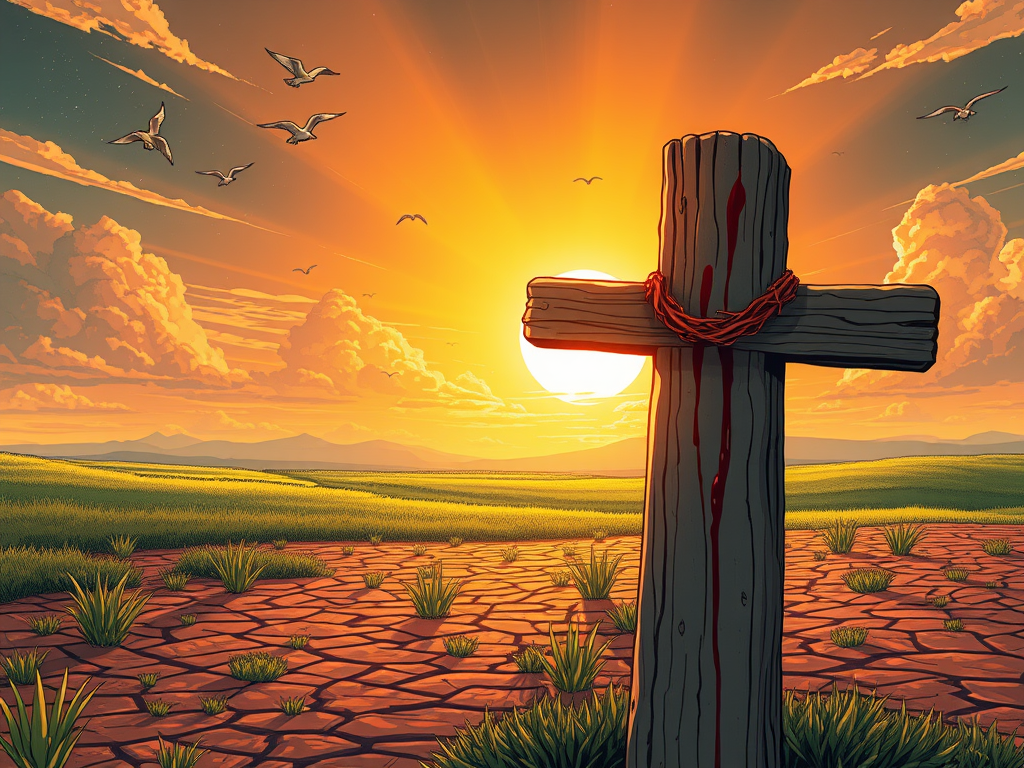
A Case for Enoch and Elijah
The identity of the “two men in white clothing” described in Acts 1:10 has long been understood within traditional Christian interpretation as angelic. This view is well established and grounded in consistent biblical patterns where heavenly messengers appear in human form.
However, there exists another line of reasoning—less commonly held, yet deeply rooted in scriptural patterns—that suggests these two figures may instead be Enoch and Elijah, the only two men in Scripture who did not experience death in the ordinary sense.
What follows is not presented as settled doctrine, but as a carefully constructed theological argument, drawing from scriptural continuity, symbolic structure, and recurring divine patterns. Once established, the argument will be treated on its own internal consistency and strength.
I. The Unique Status of Enoch and Elijah
Scripture identifies only two individuals who were taken by God without experiencing death:
“Enoch walked with God; and he was not, for God took him.”
— Genesis 5:24
“Elijah went up by a whirlwind into heaven.”
— 2 Kings 2:11
These two stand alone in all biblical history.
Hebrews reinforces the universal expectation of death:
“It is appointed unto men once to die…”
— Hebrews 9:27
Enoch and Elijah therefore exist as exceptions awaiting completion. Their removal from earth was not an end, but a preservation. They are unfinished participants in the divine narrative—men who have already crossed the boundary between earth and heaven without passing through death.
II. The Law of Witness: A Structural Requirement
Scripture establishes a foundational principle:
“By the mouth of two or three witnesses every matter shall be established.”
— Deuteronomy 19:15
This is not merely legal—it is theological. God consistently confirms His greatest acts through paired testimony.
This pattern appears at critical moments:
- Resurrection “Two men stood by them in dazzling apparel.”
— Luke 24:4 - Ascension “Two men in white clothing stood near them.”
— Acts 1:10 - Final Judgment (Revelation) “I will grant authority to my two witnesses…”
— Revelation 11:3
The repetition is unmistakable.
God does not leave pivotal transitions unverified. He establishes them with witnesses.
III. The Witnesses of Revelation: Identity Foreshadowed
Revelation 11 describes two witnesses who:
- Shut the heavens (no rain)
- Execute judgment
- Are killed and resurrected
These abilities directly correspond to known biblical figures:
- Elijah “There shall not be dew nor rain…”
— 1 Kings 17:1 - A second figure associated with death and judgment—commonly debated, but often attributed to Enoch in early theological tradition due to his preserved state.
The reasoning is straightforward:
- Enoch and Elijah did not die
- Revelation’s witnesses must die
- Therefore, they return to fulfill what remains
This establishes them as ongoing participants in redemptive history, not relics of the past.
IV. The Transfiguration: Proof of Continued Agency
At the Transfiguration:
“Moses and Elijah appeared to them, talking with Him.”
— Matthew 17:3
Elijah appears consciously, actively, and visibly.
This proves:
- He is not dormant
- He is not absent from divine activity
- He can be sent, revealed, and engaged
If Elijah appears at a moment revealing Christ’s glory…
Then it follows that he may also appear at a moment confirming Christ’s departure.
Enoch, sharing Elijah’s translated state, stands in the same category.
V. The Ascension as a Boundary Event
The Ascension is not merely a departure—it is a cosmic threshold:
- Christ transitions from earthly ministry to heavenly reign
- Humanity loses visible access to the incarnate Son
- The Church era begins
This moment demands witnesses of the highest order.
Who better than:
- The only two men who have already traversed the boundary between earth and heaven
- The only two who embody the reality that heaven can receive a man without death
Their presence is not incidental—it is symbolically perfect.
VI. “Two Men”: The Precision of Language
Acts does not say:
- “two angels”
- “two spirits”
It says:
“two men in white clothing”
This is significant.
While angels can appear as men, this description is uniquely precise when applied to:
👉 Enoch and Elijah—who are, in fact, men
The language requires no metaphor if applied to them. It is literal, grounded, and exact.
VII. Concealed Identity as Intentional Design
The absence of names is not a weakness—it is intentional.
In the Transfiguration:
- Identity is revealed to demonstrate fulfillment (Law and Prophets)
In the Ascension:
- Identity is concealed to emphasize message over messenger
Their purpose is singular:
“This same Jesus… will come back…”
— Acts 1:11
They do not draw attention to themselves. They function purely as witnesses.
VIII. The Continuity of Witness Across Redemptive History
The pattern resolves into a unified structure:
- Pre-flood / Early world → Enoch (walked with God, taken)
- Prophetic era → Elijah (taken in power)
- Christ revealed → Elijah appears (Transfiguration)
- Christ ascends → Two witnesses present (Acts 1)
- End of the age → Two witnesses return (Revelation 11)
This is not fragmentation.
This is continuity.
Enoch and Elijah are not isolated anomalies—they are threaded through the structure of divine testimony.
The Living Sign of Life Beyond Death
The presence of Enoch and Elijah within the testimony of Scripture introduces a reality that cannot be dismissed: that human life, under the sovereign will of God, is not irrevocably bound to decay or immediate death. Of Enoch it is written,
“he was not, for God took him” (Genesis 5:24),
and of Elijah,
“he went up by a whirlwind into heaven” (2 Kings 2:11).
These are not metaphors, nor are they poetic exaggerations—they are declarations that two men were removed from the mortal order without passing through the grave. Their continued existence establishes a profound truth: that corruption, though universal in experience, is not absolute in authority. As Paul later writes,
“flesh and blood cannot inherit the kingdom of God; neither does corruption inherit incorruption” (1 Corinthians 15:50),
yet in these two men, humanity is shown—if only in part—that God can suspend the ordinary progression toward corruption and sustain life beyond its reach.
Yet their existence, extraordinary as it is, does not represent the final form of what humanity is destined to become. For Scripture draws a distinction between what is preserved and what is transformed. Paul declares,
“it is sown a natural body; it is raised a spiritual body” (1 Corinthians 15:44),
and again,
“this corruptible must put on incorruption, and this mortal must put on immortality” (1 Corinthians 15:53).
Enoch and Elijah stand as living signs that mortality can be interrupted, but not yet fully overcome. They are sustained, but not described as resurrected; preserved, but not revealed in the fullness of glorification. In them, we see that death is not inevitable in timing—but in Christ, we see that death is not ultimate in power.
For Jesus Christ does not bypass death—He enters it, endures it, and overturns it. As it is written,
“Christ being raised from the dead dies no more; death no longer has dominion over Him” (Romans 6:9).
He is
“the firstborn from the dead” (Colossians 1:18),
not merely one who escaped death, but the first who passed through it and emerged in incorruptible life. His resurrection reveals not the suspension of mortality, but its complete transformation. Where Enoch and Elijah testify that a man may live beyond death’s immediate claim, Christ reveals that a man may be raised beyond death’s final authority. This is the distinction between being kept from death and conquering death—and it is a distinction upon which the entire hope of humanity rests.
Thus, when these two men stand at the Ascension, their presence becomes layered with meaning. They do not merely declare,
“This same Jesus… will come back in the same way” (Acts 1:11);
they stand as living witnesses to the reality that what has just been revealed in Christ is not foreign to humanity, but its fulfillment. Their existence affirms that life beyond death is possible, while His ascension confirms that life beyond death is now secured, established, and enthroned. As Paul writes,
“our citizenship is in heaven… who will transform our lowly body to be like His glorious body” (Philippians 3:20–21),
the trajectory becomes clear: what was once demonstrated in exception will be realized in completion.
In this way, Enoch and Elijah are not endpoints—they are signposts. Their preserved lives whisper that man is not bound to perish, while Christ’s risen and glorified body proclaims that man is destined to be changed.
“We shall not all sleep, but we shall all be changed” (1 Corinthians 15:51).
What was once rare and unexplained now finds its meaning in Him. What was once a mystery in two men becomes a promise for all who belong to Christ: that corruption will give way to incorruption, mortality to immortality, and the fragile body of the present age to the glorified body of the age to come.
The Living Witnesses
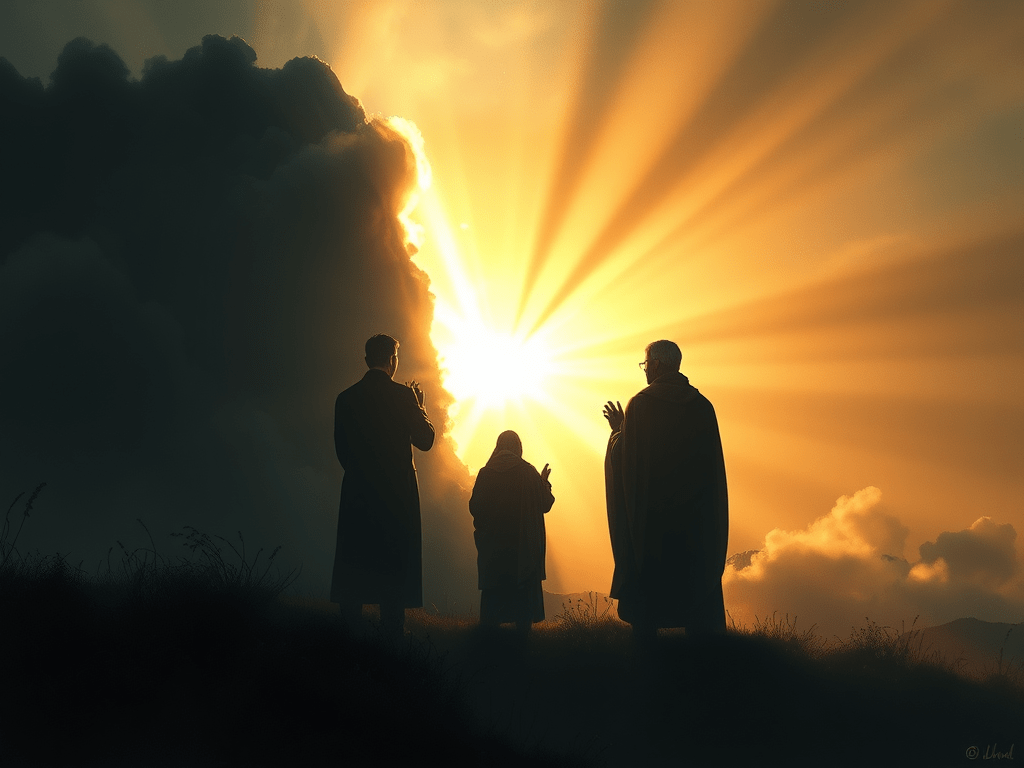
The two men at the Ascension stand at one of the most critical moments in human history, positioned at the threshold between Christ’s earthly ministry and His heavenly reign, and they speak with a clarity that pierces through awe and confusion alike: “This same Jesus… will come back in the same way…” This is not a casual remark, nor a poetic flourish meant to comfort unsettled hearts—it is a declaration of witness, a formal testimony that anchors the event in certainty and projects its fulfillment into the future. These figures are not random, nor are they ornamental messengers placed for narrative symmetry; they stand with purpose, weight, and authority. They are witnesses.
And when the full breadth of Scripture is brought to bear upon this moment—when its patterns, exceptions, and preserved mysteries are allowed to converge—only two men emerge who satisfy the depth of what is required here: men who have crossed between heaven and earth without tasting death, who remain active participants within the unfolding design of God, who align with the divinely established pattern of paired testimony, and who stand as living embodiments of transition between realms. These are not abstract symbols, nor distant relics of an ancient past, but enduring figures whose very existence bridges what is seen and unseen—Enoch and Elijah.
They are the men who did not exit the narrative through death like all others, nor were they concluded and sealed within history’s pages; instead, they were preserved, carried beyond the ordinary course of mankind, and held within the divine economy for moments such as this—moments where heaven and earth intersect, where one age yields to another, and where the truth of God must be established beyond dispute. They are not gone; they are reserved. And in this light, they stand not as incidental observers, but as appointed witnesses at the turning points of the story—men whose presence testifies that what has been declared is certain, what has been witnessed is true, and what has been promised will, without fail, come to pass.


Leave a comment