
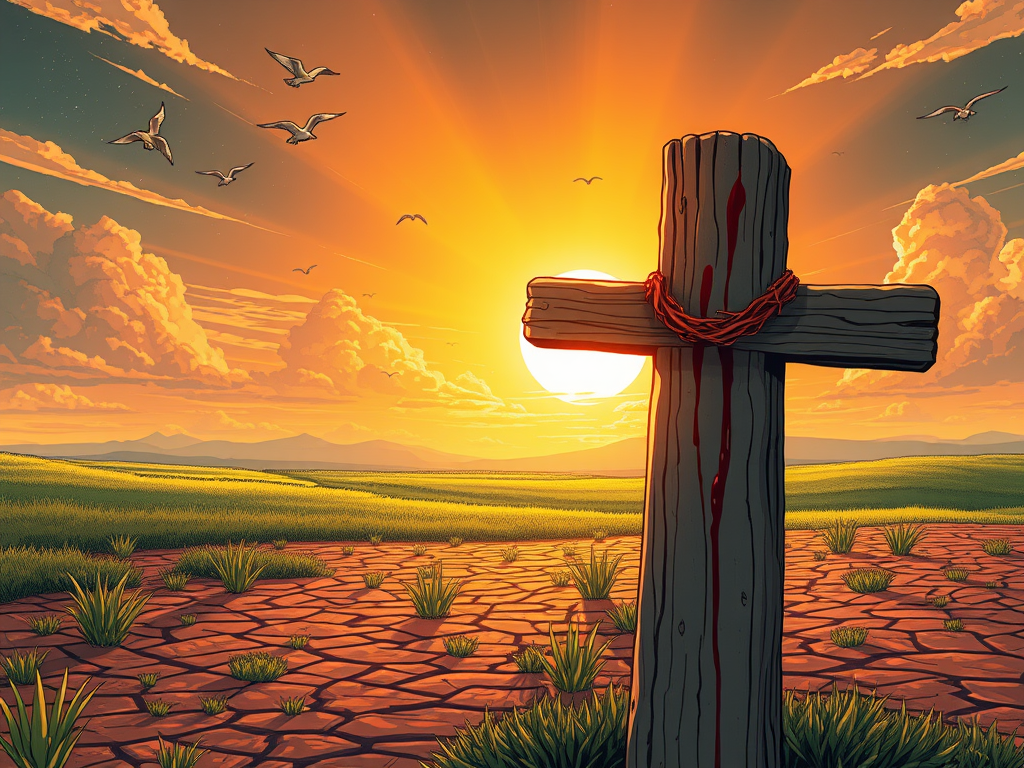
Eve as More Than a Mother
The early chapters of Genesis are more than simple narrative; they are archetypal, layered with meanings about life, death, and divine order. Too often, Eve’s title as
“the mother of all living” (Genesis 3:20)
is reduced to a biological role, as though her significance begins and ends with childbirth. Yet within the text itself, there are clues that “life” in this context reaches far deeper.
Eve was not merely the first mother in history but the vessel through which divine vitality was carried. To understand her role, we must also examine the Tree of Life, the serpent’s words, the curse, and how life narrowed from divine continuity into painful reproduction.
Eve as the Mother of All Living
Genesis 3:20 records:
“And Adam called his wife’s name Eve; because she was the mother of all living.”
The name Ḥawwāh, from the Hebrew ḥāyāh (“to live”), signifies more than childbirth. It speaks of vitality itself. The verse comes after the fall, which makes it striking: her identity is framed not by immediate motherhood but by prophetic destiny.
This view harmonizes with the preceding narrative.
In Genesis 2:7,
“the LORD God formed man of the dust of the ground, and breathed into his nostrils the breath of life.”
Life itself originates in God’s breath. Eve, then, is not the source of life, but the vessel and channel through which the divine gift continues. The “mother of all living” is less about maternity and more about continuity of the divine spark.
The Tree of Life as a Genealogy of Being
Genesis 2:9 introduces the mystery:
“The tree of life also in the midst of the garden, and the tree of knowledge of good and evil.”
Interpreting the Tree of Life as a genealogical structure reveals it as more than wood and leaves. It becomes the eternal library of all life’s potentialities—DNA, RNA, and the archetypes of human existence. To eat from it is to partake of the blueprint of life itself.
In this interpretation, immortality arises not from magical fruit, but from perpetual access to one’s own divine structure. The Hebrew mystical tradition supports this symbolic reading. The Tree of Life, later reimagined in the Zohar, is the pattern of divine emanations, a cosmic scaffolding of being. Its presence in Eden represents God’s eternal accessibility, and its removal signals humanity’s disconnection from its sustaining blueprint.
Eve as the Vessel of the Tree
If the Tree of Life contains the eternal template of humanity, Eve was the living interface with it. As Adam named her after the fall, her designation as “mother of all living” testifies to her role as the one through whom the Tree’s vitality would enter the human story. She is not simply a bearer of children, but the embodiment of humanity’s continuity.
This reading casts light on the New Testament portrayal of Mary, often described as the “new Eve.” Just as Eve held within herself the possibility of all life, Mary’s womb carried the Son of the Most High without human seed.
“The Holy Ghost shall come upon thee, and the power of the Highest shall overshadow thee” (Luke 1:35).
Both women channel the Tree of Life—Eve in origin, Mary in redemption.
‘You Shall Not Surely Die’
In Genesis 3:4–5, the serpent declares:
“Ye shall not surely die: For God doth know that in the day ye eat thereof, then your eyes shall be opened, and ye shall be as gods, knowing good and evil.”
The deception lies not in outright contradiction, but in redefining death. Adam and Eve did not collapse in the dust that day. Instead, they lost access to the Tree of Life and became mortal beings.
In their new state, humanity “became as gods” in one sense—judges of good and evil—but not in the fullness of divinity. They gained discernment without the righteousness to wield it. The serpent’s promise was a half-truth: immortality was lost, and judgment without divine wisdom became a burden. Paul later ties this moment directly to mortality:
“By one man sin entered into the world, and death by sin” (Romans 5:12).
The Curse and the Narrowing of Life
When God pronounced judgment, He declared to Eve:
“I will greatly multiply thy sorrow and thy conception; in sorrow thou shalt bring forth children” (Genesis 3:16).
Before this, Eve’s role as giver of life was expansive, connected to the Tree itself. Afterward, her role was narrowed into biological reproduction marked by pain.
Genesis 4:1 describes the transition:
“And Adam knew Eve his wife; and she conceived, and bare Cain.”
This is the first sexual union, not in the innocence of Eden, but in the context of cursed humanity on cursed ground. Abel followed, then Seth after Abel’s death (Genesis 4:25). These births were not like the life-force flowing from the Tree of Life, but the painful, narrowed continuation of the human race. Eve remained “mother of all living,” but now through struggle and mortality.
The One Seat of Righteousness
God Himself declared in Genesis 3:22:
“Behold, the man is become as one of us, to know good and evil.”
Humanity gained the power to discern, but not the right to judge. Only God may sit in that seat. To assume otherwise is to become like gods in ambition but not in essence.
This truth is echoed by Jesus when He corrected the rich ruler:
“Why callest thou me good? None is good, save one, that is, God” (Luke 18:19).
Judgment and goodness belong to God alone. James later affirms,
“There is one lawgiver, who is able to save and to destroy” (James 4:12).
Eve’s transgression did not enthrone humanity; it revealed the folly of judgment without divine righteousness.
Eve, the Tree, and the Promise of Redemption
Through this lens, Eve is more than the first mother. She is the archetypal vessel of life, tied directly to the Tree of Life, the genealogy of being itself. Her title as “mother of all living” points to the continuation of divine vitality, first through the Tree, and later through biological birth under the curse.
Yet even in judgment, hope remained. Genesis 3:15 promises that the seed of the woman would bruise the serpent’s head. Through Eve’s narrowed channel, redemption would come. Mary fulfilled this prophecy, her womb becoming the new vessel of divine life. Christ, the new Adam, restores what was lost, reopening access to eternal life. As Paul wrote,
“For as in Adam all die, even so in Christ shall all be made alive” (1 Corinthians 15:22).
From Eden to Eternity
Eve’s story is not merely the account of the first mother, nor is the Tree of Life just a mythic plant. Together, they reveal a profound truth: life itself is a divine gift, carried through vessels, patterned in a blueprint, sustained by God alone. The serpent’s deception brought mortality, the curse narrowed life into pain, and judgment became a burden humanity could not bear.
Yet the narrative ends not in despair but in promise. The same God who barred the Tree of Life in Genesis 3 reopens it in Revelation 22:
“Blessed are they that do his commandments, that they may have right to the tree of life.”
Eve, the mother of all living, points us forward—not only to survival under curse but to the restoration of eternal life through Christ. From Eden’s loss to eternity’s healing, the Tree of Life remains at the center of humanity’s destiny.

Leave a comment