
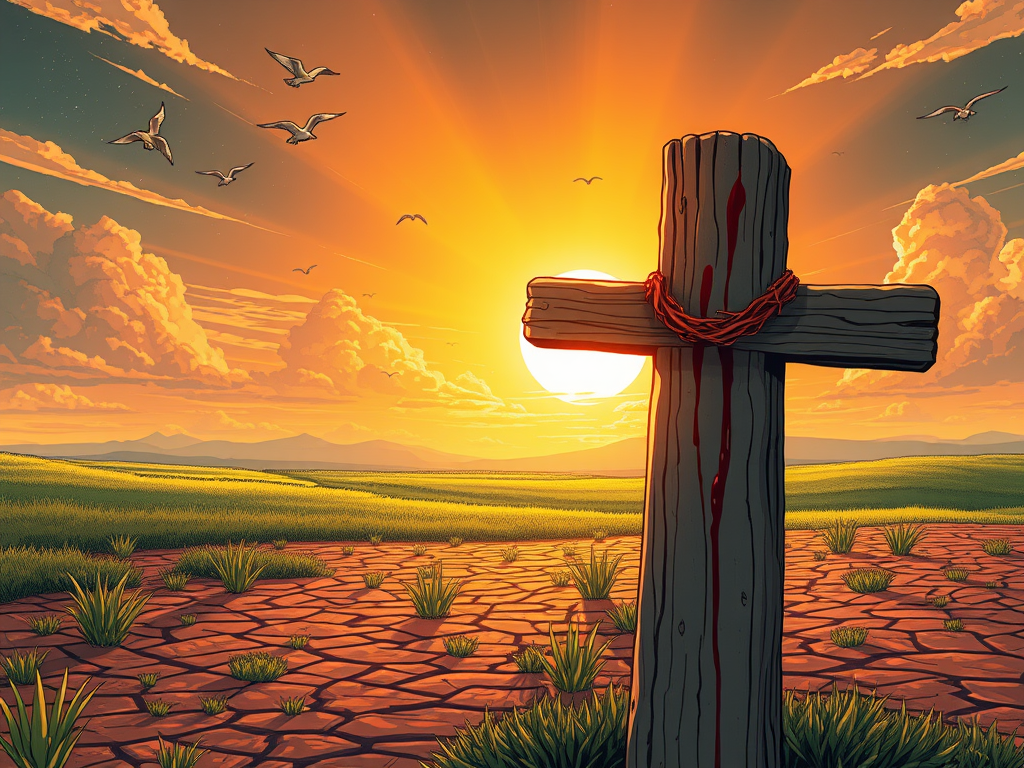
A Cry from Luke 9
“And He called the twelve together and gave them power and authority over all demons and to cure diseases, and He sent them out to proclaim the kingdom of God and to heal” (Luke 9:1–2).
Luke 9 opens in a blaze of triumph. The Twelve are no longer just witnesses; they are participants in the power of the Kingdom. They travel in pairs, “taking nothing for their journey” — no staff, no bag, no bread, no money (Luke 9:3) — yet return with stories of demons expelled, the sick restored, and hope reborn in villages long shadowed by despair.
It is the kind of season that feels unstoppable — the swell before the crest of a wave. Even Herod Antipas hears the whispers and is troubled, unsure if this is John the Baptist resurrected or another prophet come to disturb his uneasy throne (Luke 9:7–9).
The Miracle of Provision
The people flock to Him in the wilderness. Five thousand men, not counting women and children, sit on the grass and watch bread multiply in His hands. “And they all ate and were satisfied” (Luke 9:17).
The crowd sees in Him a leader who can fill empty stomachs and, perhaps, overthrow Rome’s heavy hand. They picture thrones and feasts, not thorns and nails.
Kingdom Expectation
In the midst of this rising acclaim comes Peter’s declaration: “You are the Christ of God” (Luke 9:20). The words must have burned with conviction. This is the Deliverer, the Anointed One — the answer to centuries of longing. Surely the crown is near. Surely this is the beginning of a reign without rival.
The Air Changes
The swell of excitement is almost tangible. The mission has been a success, the people are fed, Peter has declared Him “the Christ of God” — the very King Israel has longed for. The crowd hums with the expectation that this is the moment the Messiah will rise to power. Their hearts beat with the rhythm of old prophecies: thrones restored, enemies overthrown, the Roman eagle torn down from its perch over Jerusalem.
But then, Jesus speaks words that crash into that dream like a warship into a fishing boat:
“The Son of Man must suffer many things and be rejected by the elders and chief priests and scribes, and be killed, and on the third day be raised” (Luke 9:22).
It is a statement so at odds with their vision of the Kingdom that it must have felt like the ground gave way beneath their feet. Suffer? Rejected by the elders? Killed? These were not the verbs of victory; these were the verbs of defeat. A Messiah who dies at the hands of His own leaders? A Kingdom whose arrival begins with its King’s public humiliation?
This is not the war cry of Israel’s liberation. This is the death sentence of its Deliverer.
And before the shock has time to settle, before the murmurs and questions and offended hopes can find voice, He presses further — not softening the blow but driving it deeper:
“If anyone would come after Me, let him deny himself and take up his cross daily and follow Me” (Luke 9:23).
It is not only that He will die. It is that they must be ready to as well. He does not promise them thrones, but crosses. He does not speak of overthrowing Roman rule, but of carrying the very instrument of Roman execution on their own shoulders — and not in a single heroic moment, but daily.
For thousands who had seen Him as the dawn of Israel’s national revival, this was a breathtaking, bewildering turn. They came expecting a coronation; they received an invitation to a death march.
Where the Road Leads
This is no stray proverb tossed into the breeze. Everything before it — the power given to the Twelve, the mission accomplished in His name, the miracle of bread in the wilderness, the swelling fame among the crowds — has been building to this decisive moment.
Up until now, the path of discipleship has been paved with healings and victories, with crowds pressing in to hear His words. But now the King lifts the veil. The road He walks is not one that spirals upward into the palaces of Jerusalem, but one that bends downward toward rejection, trial, and execution.
And here is the turning point — He is not only revealing His road; He is defining theirs. This is the instruction manual for the real disciples, the ones who will walk with Him when the crowd’s cheers fade into the hiss of accusation. It is His way of saying:
“If you truly follow Me — not just in the days of miracles and plenty, but in the days of shame and want — then you must prepare to go where I go. As My steps lead to the cross, so must yours.”
This is the call to the core. The crowd may shrink at such a summons, but the true disciple will understand: the Kingdom does not advance by the sword against Rome, but by the surrender of the self to God — even unto death.
The Modern Turn
And yet — how different the vision often is in our day. We imagine following Him as a march toward influence, comfort, and applause.
We adorn the cross but do not carry it. We speak of blessing as though it were measured in wealth or ease, forgetting that the One who calls us blessed also said,
“Blessed are you when people hate you… on account of the Son of Man” (Luke 6:22).
In many corners of the modern church:
- The wilderness feeding has become the conference stage, where spiritual bread is replaced with slogans to “unlock your potential.”
- The sending of the Twelve has become the branding of the one, building platforms and personal empires.
- The confession of Christ as Lord has become a catchphrase for life-coaching rather than a surrender to the death of self.
Our shelves groan with books promising “Your Best Life Now” while our Savior says plainly, “Whoever would save his life will lose it, but whoever loses his life for My sake will save it” (Luke 9:24).
Face Toward Jerusalem
Jesus’ own road does not linger in the applause of the crowd or the security of Galilee. “When the days drew near for Him to be taken up, He set His face to go to Jerusalem” (Luke 9:51).
To follow Him is to walk into the same wind — not only in the moments of joy, but also into the shadowed valleys where obedience may cost reputation, safety, or life itself.
A Call to Return
Oh my friends, the daily cross is not a burden we shoulder when it suits us, nor an ornament to polish for display. It is the very shape of our discipleship. Yet across the breadth of Christendom, we have traded its weight for its shine. We lift it high in ceremony… but leave it behind when it slows our stride. We have learned how to honor the cross without enduring it.
Let His dust cling to our feet.
Let His call still ring in our ears:
“If anyone would come after me, let him deny himself and take up his cross daily and follow me” (Luke 9:23).



Leave a comment