The Forgotten Difference That Changes Everything
Grace is.
Grace is the sunlight that rises without request. It is the warmth on the faces of the faithful and the wicked alike. Grace does not demand recognition or performance—it simply exists. It is present in beauty we did not earn, in joy that appears unprovoked, in the unspoken kindness that meets us before we know we need it.
Grace is the breath given to lungs that never asked for it. It is the wind in the trees and the song in the stars. It gives without calculation. It blesses without weighing. It surrounds us quietly, abundantly, impartially.
“Grace is not the second breath after failure—it is the first breath before we ever drew our own. It is not what God gives when we repent—it is what kept us alive long enough to even consider it.”
— Silent Truths
And because it is so freely given, we must not confuse it with mercy or mistake it for a second chance. Grace is not a reset. It is not correction. It does not arrive in response to failure—it was already there before the fall. It does not wait for repentance. It does not measure outcome.
Grace is the unrelenting generosity of God that moves simply because God is.
God Causes Grace
Grace is not a reaction. Grace is not drawn out of God by human behavior. There is no provocation, no moral trigger, no sorrow deep enough to spark it. Grace flows because God causes it to flow.
The Hebrew Scriptures are unapologetic about this causality. In Exodus 33:19, when Moses pleads with God to show him His glory, the response is not a vision of thunder or flame—it is a theological declaration:
“I will cause all My goodness to pass before you, and I will proclaim the name of the Lord before you. I will be gracious to whom I will be gracious, and I will show mercy on whom I will show mercy.”
— Exodus 33:19
The word “cause” here isn’t ornamental—it is foundational. God’s goodness is not a reaction to Moses’ request. It is an act of divine will. It is a sovereign, initiating reality. The grace Moses experiences is not a reply—it is a revelation. And this revelation is not confined to the mountaintop. It continues on the lips of Christ, who echoes the same causality in His teachings:
“But I say to you, love your enemies and pray for those who persecute you,
so that you may be sons of your Father who is in heaven;
for He causes His sun to rise on the evil and the good,
and sends rain on the righteous and the unrighteous.”
— Matthew 5:44–45 (NASB)
Jesus does not say the sun responds to goodness. He says God causes it to rise—on the evil and the good alike. He does not say rain is earned. He says God sends it—on the righteous and the unrighteous.
This is not justice. This is grace.
Not because of who we are, but because of who He is. The sun rises because God is gracious. The rain falls because God is gracious. Not as reaction. Not as reward. But because grace is causality embedded in the nature of God Himself.
This sets grace in absolute contrast to mercy. While mercy responds to need, to sin, to suffering, grace exists independently of all three. Grace was present in Eden before the Fall. It was present in the breath given to Adam before Adam ever chose obedience or rebellion.
Grace does not depend on man’s failure or man’s faith. It is the uncaused cause—because God Himself is the cause.
So when Scripture says He is “gracious,” it is not describing an emotional tendency. It is describing a self-originating reality. Grace is not something God does when He feels merciful—it is something He causes to occur because it reflects His eternal nature.
And because of this, it cannot be revoked, manipulated, earned, or withheld. It is simply there, as sure as light before the sun was hung.
Mercy Bleeds
Mercy is something else entirely. Mercy is not passive or ambient. It does not hover overhead like dew on morning grass. It does not rest on the shoulders of the unaware.
Mercy steps into a moment where wrath is deserved—where judgment is imminent—and does something that grace never has to do: it pays.
Mercy is not given at a distance. It walks into the courtroom, into the alley, into the temple square, and kneels beside the condemned.
Mercy is Jesus writing in the dust while a crowd clutches stones. In John chapter 8, a woman caught in the act of adultery is thrown at His feet—naked, trembling, and guilty.
The law is clear. She must die.
The punishment is public and permanent. But instead of affirming the justice she deserves, He disarms the crowd with a single sentence:
“Let him who is without sin cast the first stone.”
The tension breaks. The stones fall. And in the silence, the only one without sin—the only one who could cast the first stone—doesn’t. He looks into the eyes of the humiliated, the shamed, the guilty, and says,
“Neither do I condemn you. Go and sin no more.”
This is not grace. It is mercy. And mercy requires presence. It requires confrontation. It does not ignore sin—it absorbs its power and still refuses to strike. It is not cheap. It is not easy. It is love standing in the path of wrath, fully aware of what it’s blocking.
Mercy Not Free
From the earliest days of Israel’s covenant, God made it clear that mercy would not be free. In the Tabernacle, the holiest object was the Ark of the Covenant. On top of the Ark rested a slab of solid gold—the kapporet, the Mercy Seat. Once a year, the high priest entered the Holy of Holies, carrying blood. That blood was not symbolic. It was lifeblood—the cost of sin paid through sacrifice. The blood was sprinkled on the Mercy Seat to atone for the sins of the people, not by denying them, but by acknowledging them fully—and paying their price.
Leviticus 16 paints the scene in detail. The priest could not speak flippantly. He could not approach casually. Blood was required. The presence of God demanded justice—but He created a place where that justice could be met with mercy. Not through soft words. Through death.
“No one may enter the Holy of Holies without blood. The high priest must wash, prepare, and come trembling. For the Lord will appear in the cloud above the mercy seat—and without blood, there is no mercy.”
— Paraphrase of Leviticus 16
When Paul reflects on this centuries later, he uses language the original readers would have recognized immediately:
“Whom God displayed publicly [before the eyes of the world] as a life-giving sacrifice of atonement and reconciliation (propitiation) by His blood [to be received] through faith. This was to demonstrate His righteousness, because in His forbearance He passed over the sins previously committed [before Jesus’ crucifixion].”
— Romans 3:25 AMP
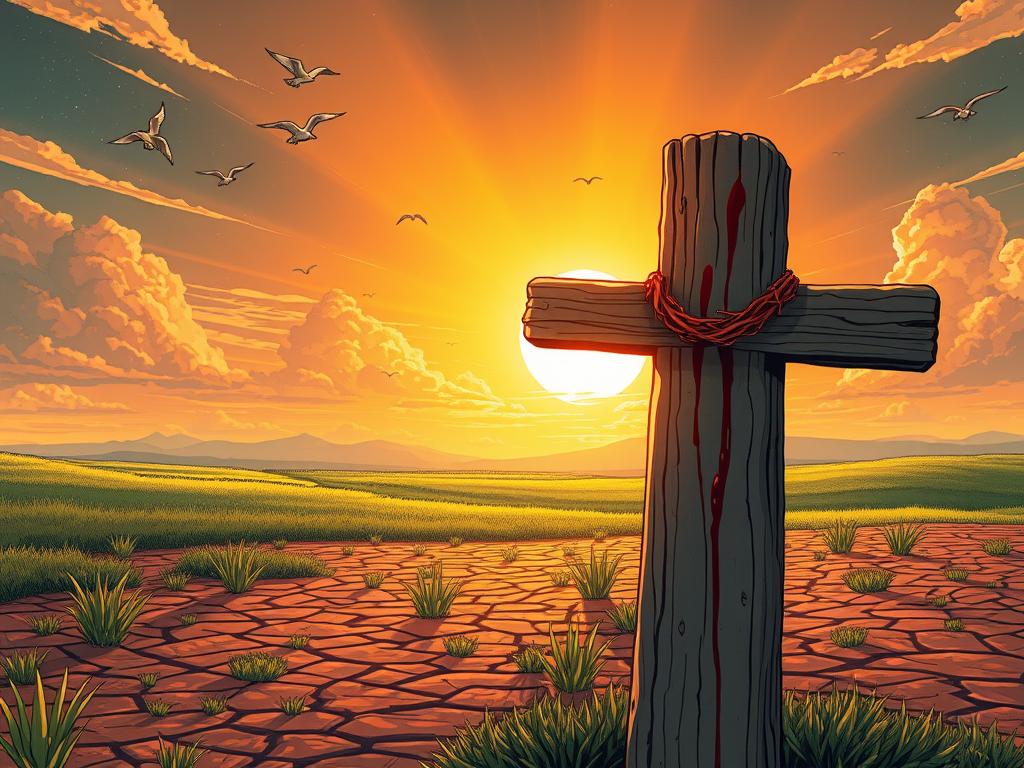
Christ is not just the forgiver. He is the place where the wrath of God meets the withheld punishment of man. The cross is not a place of grace—it is the Mercy Seat. And what soaked it was blood.
Confusion That Killed
We’ve confused grace and mercy so deeply that we’ve robbed both of their power. We’ve made grace conditional, as if it waits for failure before arriving. We’ve made mercy casual, as if it costs nothing to forgive. And in doing so, we’ve emptied the cross of its gravity and made God’s generosity look like mood swings.
But grace is not what God gives when we fall. It is what sustained us long before we ever stood.
It is not a second chance. It is not a reset.
It is the cause, not the response.
And mercy? Mercy is not a soft apology. It is the bloody collision between what we deserve and what He withheld.
It is the Son of God hanging in silence while wrath passes Him by—and lands on Him instead.
It is Jesus stooping in the dirt between a guilty woman and a crowd with stones.
It is justice delayed not by leniency—but by blood.
“Grace and mercy are not the same. Grace is the garden—we breathe because it is. Mercy is the blood on the gate—we’re not destroyed because He stood in our place.
But when we confuse them—when we make grace conditional or mercy weightless—we forget the sound of the nails and the silence of the tomb. We lose the heartbeat of the Gospel.”
— Silent Truths



Leave a comment