Cold Fire
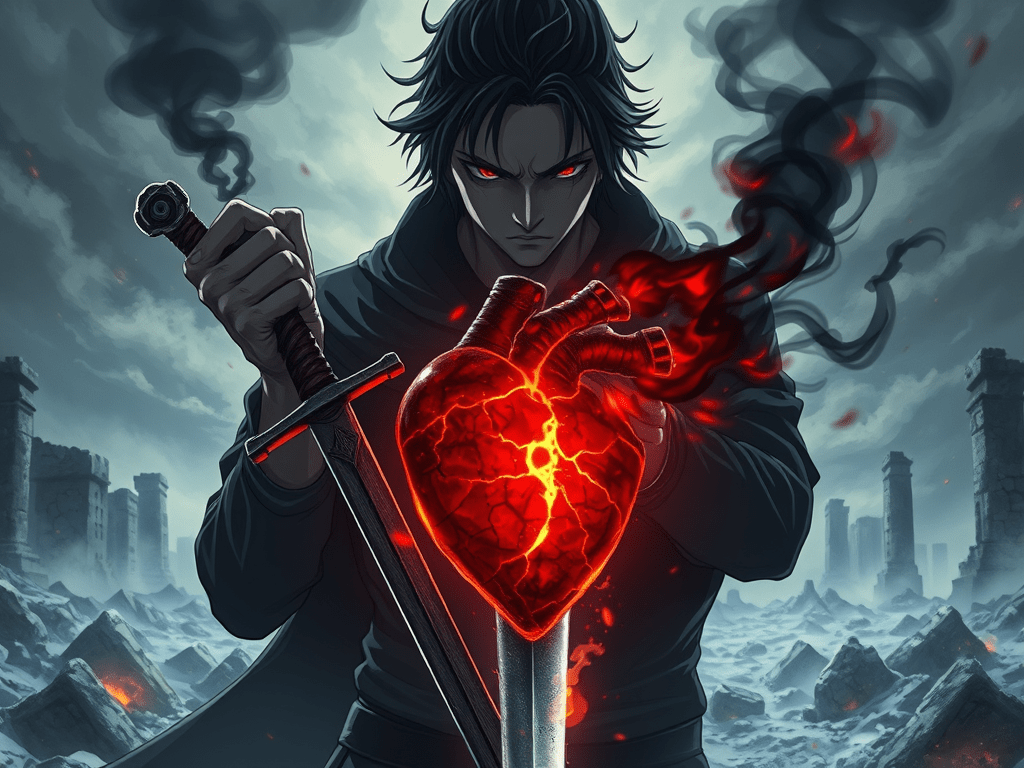
Revenge, the coldest fire of all, does not burn in rage—it freezes in remembrance. It does not merely respond to injury—it reshapes the world around it to justify retaliation. It does not seek healing—it seeks equal pain, or more. And in exacting that toll, it costs the avenger the one thing he thinks he’s preserving: his soul.
Vengeance Writes Its Name
Long before revenge became a hashtag or a plot device, it was a ritual, a law, a divine right—a curse inherited like blood. It was not just an act—it was a structure. Entire civilizations built codes not to end revenge, but to contain it, to channel it, to balance it like flame in a sealed lamp.
We will walk through stories older than paper, whispered through empires and echoing in sagas and scripture alike. This is not a single religion’s tale—it is the shared inheritance of the wounded, the history of what men do when they believe they’ve been dishonored… and cannot bear to walk away.
We begin where it all started—with Cain.
Humiliation
It wasn’t killing in battle. It wasn’t acting in self-defense. The first death in human history came from something colder—revenge.
One man lifted his hand against his own brother, not because his brother had harmed him, but because his own offering was rejected. It was Cain. And it wasn’t justice he sought—it was something darker.
The ache to punish what exposed him. The silence of shame. And in that silence, revenge was born. It wasn’t loud—it was ancient. Not rage. Not hatred. But the cold fire of humiliation transfigured into violence. And in that moment, the ground received its first taste of human blood.
And to this day, vengeance carries the same illusion:
“If I destroy what shames me, I’ll be whole.”
Humiliation is unlike any other wound. It’s the moment a man feels seen in his smallness, and cannot bear it. It’s not pain—it’s exposure. That is the cruel alchemy of humiliation: when a man cannot restore his own worth, he destroys the one who reflects it back to him.
Betrayal
Across generations and civilizations, vengeance threaded its way through the veins of power and legacy. In ancient Greece, revenge didn’t die with the deed—it passed forward like inheritance. No house bore this more tragically than the House of Atreus.
Agamemnon, commander of the Greeks in the Trojan War, sacrificed his daughter Iphigenia to summon favorable winds for battle.
It was a calculated loss—victory bought in blood.
When he returned home in triumph, his wife, Clytemnestra, welcomed him with false warmth. In his own palace, she murdered him, not in rage, but in vengeance—for her daughter, for her grief, for the silence of men who called it war but not sacrifice.
Years later, their son, Orestes, returned to avenge his father. He killed his mother, fulfilling a duty to blood and name, but in doing so, became both hero and pariah.
The Greeks did not condemn him—they understood.
This was how balance was kept. To avenge was not cruelty. It was obligation. The cycle continued because breaking it felt like betrayal.
The vengeance that fueled this cycle was not humiliation, like in Cain’s story—it was something even more tragic: betrayed devotion. A father betrayed the sacred trust of a mother. A wife avenged the child she could not protect. A son avenged the father he was told to honor. And each believed they were right.
When vengeance becomes tradition, it no longer asks who was right—only who is next.
It reached such a fevered pitch that even the gods had to intervene. Vengeance had become too sacred, too expected, too consuming. Humanity could no longer contain it.
“When neither sword nor supplication could extinguish the fire, Athena descended and established what mortals could not: a tribunal. In place of blood, she offered deliberation; in place of vengeance, judgment.
Justice was not given as a gift—but imposed as a boundary.”
— Silent Truths
From Cain, we saw how humiliation—the wound of being seen as lesser—could ignite the first murder. In the House of Atreus, the fire evolved into betrayed devotion, where vengeance was not born of pride but of violated love and sacred obligation.
Redemption
There were those who vowed not just to kill, but to drink the blood of those who wronged them. And they did. These were not monsters, not madmen. They were sons, brothers, husbands—men who could not live with who they had been in the moment that mattered most. Their revenge was not just loyalty—it was atonement. Their rage was not just righteous—it was remedial, a desperate fire to cauterize the wound left by their own silence.
In the ancient Indian epic, the Mahābhārata, a queen named Draupadi is dragged into a hall of kings and publicly humiliated. Her husbands—mighty warriors born of gods—remain seated. Silent. Bound by rules, by honor, by uncertainty. She is not touched, but she is stripped—of dignity, of protection, of justice. Her cry does not just shame her enemies. It shames her own.
One of them, Bhima, cannot bear the echo. He vows aloud:
“I will rip open the chest of the man who did this to you and drink his blood with my own hands.”
And later—he does.
It is not metaphor. It is not poetry. It is ritual vengeance, born not in the moment of offense, but in the long, hollow stretch of guilt that followed it. His fire is not lit by wrath—but by the version of himself he cannot forget. The one who sat still. The one who watched.
This is not revenge as impulse. It is revenge as redemption, kept warm like a coal in the mouth, year after year. And when it is fulfilled, it is not celebrated. It is not questioned. It is understood. Because in that world, and in many like it, vengeance was the only path left to reclaim lost honor—to declare that the silence was not the final word.
“A man who cannot forgive himself for his silence will dress that silence in fury, and call it justice. He does not seek balance—he seeks to outlive the ghost of who he was.”
— Silent Truths
The story never changes. Only the names.
Domination
In the rise of Rome, vengeance was no longer seen as savage. It was strategic. It was law. When Rome conquered a people, it did not act in rage—it acted in message. To resist Rome was to offend its name, and Rome answered offense with permanence.
And so the fire passed from decree to general, from general to centurion, from centurion to sword. The empire did not burn in passion—it burned in protocol.
Revenge didn’t die. It was codified.
It wore bronze.
It marched in columns.
It carved roads into the lands it punished.
“This is not vengeance. This is order.”
— Silent Truths
That single belief justified centuries of brutality. It was the coldest form of revenge: sanctioned, organized, glorified. Rome did not think of itself as vengeful—it thought of itself as divine.
And to the non-Roman, to the conquered, to the crucified, retaliation was not a decision. It was a death sentence. To strike back was to be erased. To forgive was to be forgotten. And so vengeance survived—not among the victors, but among the subjugated. It smoldered beneath the stones of empire.
What once burned in personal fury or tribal loyalty had now become institutionalized conquest. Rome didn’t weep. Rome didn’t bleed. Rome recorded. Rome taxed. Rome executed. Its vengeance did not shout—it calculated. It moved with the cold patience of permanence.
And in that transformation, vengeance lost its name.
It no longer looked like wrath.
It looked like empire.
American Rome
In the rise of American gangs, syndicates, and families—especially in the early 20th century—vengeance was no longer seen as savage. It was procedural. A hit wasn’t about rage. It was a message. A repayment. A rebalancing of power.
And so the fire was passed to the next in line—to the consigliere, the enforcer, the hitman.
Revenge didn’t die. It got promoted.
It put on a suit.
It opened a storefront.
“It’s not personal. It’s strictly business.”
— Silent Truths
That single line from The Godfather says everything.
It is the coldest version of revenge: sanctioned, funded, expected.
Even among early immigrant street gangs in America—Irish, Italian, Jewish, Black, and Latin crews—retaliation wasn’t a side effect of street life. It was the structure. To not retaliate was to lose your place. To show weakness. To be forgotten. You didn’t rise through peace.
What once came from the raw agony of loss or the sacred wound of betrayal had now become something colder—methodical, emotionless, and void of spirit. Vengeance no longer burned. It calculated. It moved without hesitation, without remorse, without question.
And in that cold transition, vengeance lost its face. It no longer looked like pain. It looked like power. And power does not weep, does not tremble, does not pray. It simply ensures the fire keeps moving forward—even if no one remembers what first lit it.
Abstention
There came a point in vengeance’s long reign when the fire had nothing left to prove—when it had touched every corner of humanity, from personal shame to national code. But in one unrepeatable moment, the story was interrupted by divine abstention.
The Creator Himself stepped into the cycle—not to take His rightful revenge, but to lay it down. It was not inaction. It was intervention. And in that moment, something older than vengeance was revealed—a power beyond retaliation, exercised not in fury, but in restraint.
“He withheld the wrath that had every right to strike—not in weakness, but in final authority. For mercy was older than vengeance; it was spoken before the first wound, and it will stand after the last fire dies.”
— Silent Truths
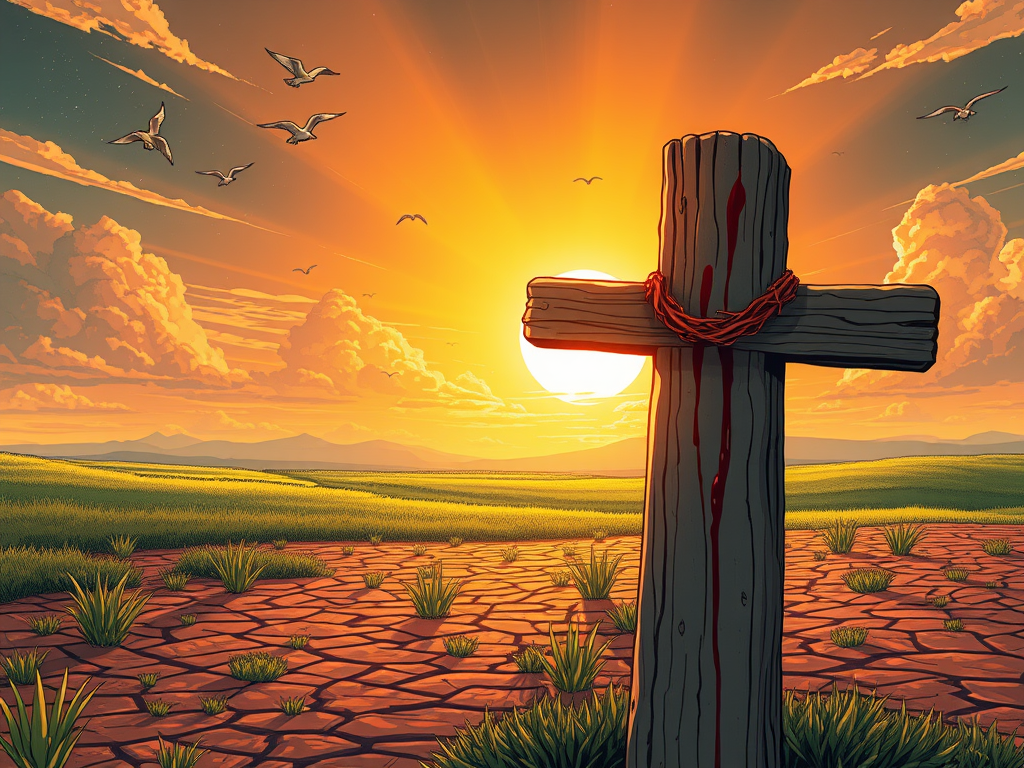
He stood there, bound and bloodied, with legions of angels at His call—and He said nothing.
When false witnesses twisted His words, He did not defend them. When soldiers crowned Him with thorns and struck His face, He did not return the blow. He was flogged, mocked, paraded through the streets of the city He wept over, and nailed to a cross by men who were carrying out orders—men He could have undone with a breath.
The crowd sneered. The leaders scoffed. His friends fled. And heaven—heaven was silent. For the first time, vengeance had no answer. The very One who formed justice with His own hands now let injustice pierce them. This was not the failure of power. This was its fulfillment: God choosing not to respond, not because He lacked wrath, but because He held something greater.
And then, from the cross—when His blood was still warm on the wood, when His breath came in broken gasps, when the world expected either cursing or silence—He spoke. Not condemnation. Not vengeance.
With one sentence, He declared that no act of violence, betrayal, or humiliation would ever again have the final word. Forgiveness had entered the fire—and the fire could not consume it.
“Father, forgive them, they know not what they do.” He said.
Not because they repented. Not because they asked. Not because they deserved it.
But because mercy is not earned—it is given.
In that moment, the architecture of vengeance cracked. Every cycle that demanded repayment, every oath sworn in rage, every law that measured pain for pain—all of it was brought before a voice that asked for none of it in return.
Reflection
And now, maybe you feel it too—the slow burn that never left. Maybe it isn’t loud. Maybe it never was. But it’s there, quietly flickering behind your thoughts, behind your silences, behind your sharpened smiles.
Maybe it was humiliation—not in the public square, but in the hidden room where someone made you feel small, powerless, invisible. You carry it like a splinter in the soul, long buried but never healed. You swore you’d never be made to feel that way again.
Maybe it was betrayal—by the one who was supposed to protect you, stand with you, love you. The trust that broke, not in anger, but in slow abandonment. The kind of betrayal that leaves you walking in circles, telling yourself you’re over it, even while your spirit builds walls.
Or maybe it was redemption—but not the holy kind. The kind you tried to forge in fury. The kind where revenge became the only way to clean your conscience. Maybe you did something you can’t undo. Maybe you didn’t act when it counted. And now, the only way you know to quiet that memory is to lash out at others who remind you of yourself.
Or maybe it’s deeper—domination. Maybe the fire has become structure. Maybe you’ve worn it so long, it feels like part of you. You don’t call it vengeance anymore. You call it standards. Boundaries. Power. And you wield it cleanly, coldly, without question. Because you think if you stop swinging, the world will take everything from you again.
But what if… you don’t have to carry it?
What if that fire isn’t protecting you anymore—but consuming you?
Whispers of Power
The fire of vengeance will always offer itself as power. It will whisper that it protects you, that it gives you dignity, that it settles the scales when no one else will. But what it never tells you is that it requires you to carry it forever—to keep feeding it with memory, anger, and silence. And so long as you hold it, it will own you.
It does not sleep. It does not forgive. It only waits for your next wound to strike again. But mercy… mercy does not ask to be carried. It asks to be released. Mercy will not make you feel powerful—but it will make you whole. Because the fire does not end when it consumes your enemies. It ends when you stop throwing it.
Mercy is not weakness. Mercy is the sovereignty of the soul. Mercy is freedom. Mercy is peace.
— Silent Truths




Leave a comment