A Hidden Language
The stillness allowed something to surface—something waiting patiently beneath the noise and commotion for many years.
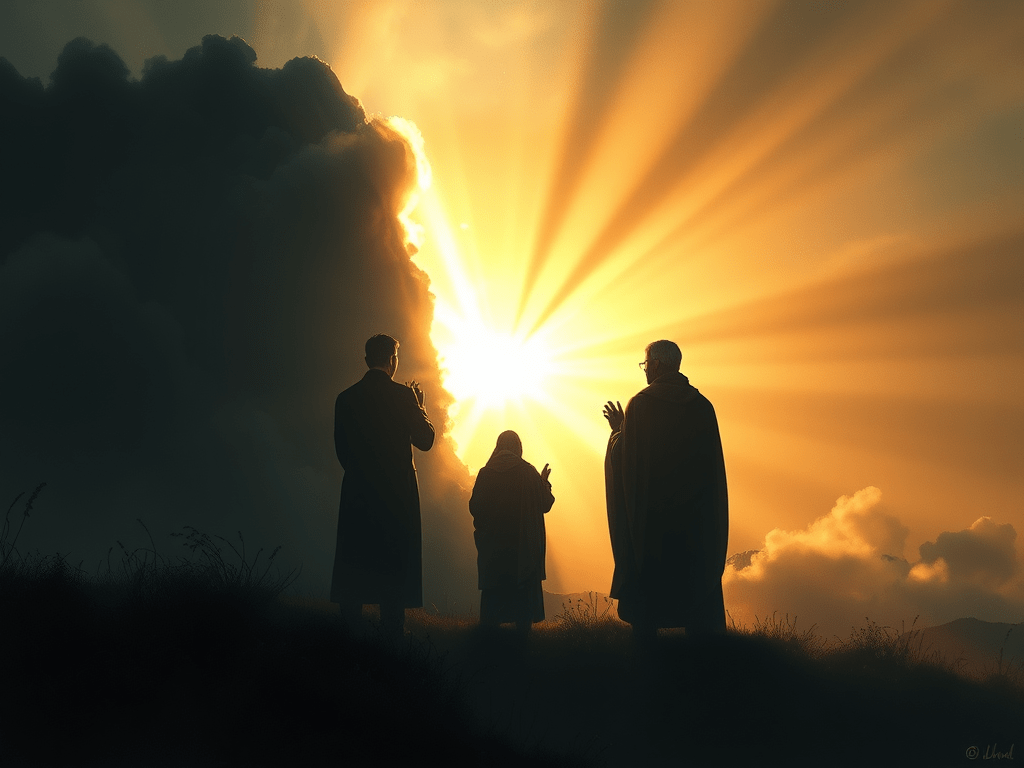
It came softly, like a whisper I had heard my whole life, subtle and indistinct, threading through the quiet corridors of my mind. Not the voice of a person, not the pages of a book—but a presence.. It stepped forward, calm and composed, and spoke its name to me: Wisdom.
Nearness in Silence
Wisdom was always near, but I had mistaken it for coincidence, for instinct, for fragments of advice I never truly listened to.
“Knowledge forms the shadow; wisdom is the source of light behind it.”
— Darian Ross, Silent Truths
I had heard its voice in the words of teachers, in the warnings of elders, in the strange clarity following moments of regret.
But I did not know the name of the voice. The voice never demanded. It never shouted. It only waited.
“Counsel in the heart of man is like deep water; but a man of understanding will draw it out.”
— Proverbs 20:5
Wisdom has depth. It has voice. It speaks only when there is silence in the soul.
“Great men are not always wise: neither do the aged understand judgment.”
— Job 32:9
Wisdom walks like an old friend who was always waiting for the invitation.
Wisdom does not favor the aged—she favors the listening.
Flooded and Blind
We are surrounded by knowledge. It pours in through every device, every scroll, every conversation overheard on a street or in a feed. We know what our neighbors eat, how their children perform, where they vacation, and what private wounds they share online. We are inundated with details. But there is no silence between them. No time to perceive. No stillness to understand.
There is no wisdom.
This is not information—it is overload. We are offered the illusion of understanding without the cost of reflection. We crave knowledge like a drug: fast, constant, synthetic. We want to know, but we do not want to see.
Jesus once said:
“Seeing they do not see, and hearing they do not hear, nor do they understand.”
— Matthew 13:13 (ESV)
He spoke these words not in sarcasm, but in sorrow. The people around Him were saturated with Scripture, tradition, and knowledge. But their eyes were clouded. They could not discern wisdom, even when it stood in front of them in flesh and blood.
And today, we are no different.
We ask AI to write our thoughts. We read headlines and call it insight. We treat speed as virtue. But wisdom does not move at the speed of data. It waits behind it. It does not shout above the noise—it whispers beneath it.
Jesus also warned:
“What good is it for a man to gain the whole world and forfeit his soul?”
— Mark 8:36 (ESV)
And we are gaining everything. All knowledge. All access. All visibility. But we are forfeiting the soul of things. We know the price of everything and the value of nothing. We know how to build machines, but we do not know how to quiet our minds. We know what others do wrong, but not how to break our own pride. We know content, but not character.
We live under a canopy of shadows—cast by knowledge unlit by wisdom.
Intangible Language
Wisdom isn’t a substance we acquire. It’s not a set of principles we can memorize or a collection of quotes we can recite.
“Wisdom speaks a language that cannot be learned by study—it must be lived. It is a dialect written not in ink, but in the scars, silences, and sacred repetitions of life’s experience.”
— Darian Ross, Silent Truths
As a younger man, I stood in the great halls of knowledge thinking I had reached the summit. The architecture was vast—vaulted ceilings of reason, pillars carved with disciplines and doctrines, corridors lined with the writings of minds greater than mine. I mistook the awe I felt for understanding. I believed I had arrived.
I was only staring at the walls, mistaking the markings for mastery. The inscriptions glowed with meaning I could not access. I could sound out the syllables, pronounce the words, mimic the cadence of intelligence—but I could not translate their depth.
I was like a archaeologist uncovering a buried temple, surrounded by symbols and sigils of ancient truths, holding the artifacts of a lost civilization, yet unable to read the language written into its very bones.
“We have found many inscriptions, but we cannot yet read the story they tell. The language has not yielded its secret.”
— Howard Carter, discoverer of King Tutankhamun’s tomb
I gathered the fragments. I catalogued the signs. I convinced myself I was close to something profound. But proximity to knowledge is not possession of wisdom.
No amount of light can reveal meaning when your eyes are not yet trained to see it. Meaning only comes when knowledge begins to echo through the corridors of time and suffering and mercy and silence.
Learning to Read
Wisdom was always present, but I lacked the eyes to recognize her. Her dictionary of dialect was always in front of me, but I could not read it because I had not yet lived its definitions. I had confused comprehension with clarity. I had mimicked the voice of understanding without ever having earned its tone.
“Wisdom crieth without; she uttereth her voice in the streets:
She crieth in the chief place of concourse, in the openings of the gates: in the city she uttereth her words…”
— Proverbs 1:20–21
Wisdom enters not like a lecture, but she sits beside me, quietly, as though she has always been here, waiting for me to grow still enough to notice her presence. The more I listen, the more I realize she speaks gently, not in declarations, but in familiarity. There is no show, no force, no need for applause. She simply is.
Lens of the Past
I believe now when wisdom begins to emerge as we begin to re-experience knowledge through the lens of our past. When something painful happens, I see it reflected faintly in something I once read. When I lose someone, I recall a truth I once heard and now finally feel.
Each of these moments becomes a small translation.
“The words of the wise are as goads, and as nails fastened by the masters of assemblies, which are given from one shepherd.”
— Ecclesiastes 12:11
Little by little, I begin to understand the dialect. I begin to see how the patterns I once dismissed were actually profound, and how the teachings I thought I knew were merely placeholders for meaning I had not yet grown into.
Wise Old Men
I no longer view the elderly as simply those who’ve lived longer lives. I see them now as translators, as walking Rosetta Stones whose very existence offers interpretation of the language I’m only beginning to learn.
“The aged do not speak with Wisdom because they know everything—but because they’ve watched her meaning rise from what once appeared meaningless.”
— Darian Ross, Silent Truths
Their words have weight not because of their volume, but because they have passed through decades of refinement. Even their silence speaks, because behind that silence is a library of meaning built through loss, triumph, failure, and grace.
Vanity of Youth
The vanity of youth is not in seeking knowledge—it’s in assuming we already understand what it means.
“Better is a poor and a wise child than an old and foolish king, who will no more be admonished.”
— Ecclesiastes 4:13
A quiet vanity convinces us we are fluent in wisdom after watching a few clever videos or reading a handful of philosophical threads.
“Folly is bound up in the heart of a child, but the rod of discipline drives it far from him.”
— Proverbs 22:15
There’s something sacred about realizing you know very little. Not in the form of insecurity, but as a quiet surrender to the truth that wisdom isn’t owned—it’s hosted. It visits, it rests, it speaks when we are ready, and not a moment before.
My Words
I write all this not because I’ve mastered the language of wisdom, but because I’ve only just begun to hear it clearly. It is the most important realization I’ve had in years: that I was not meant to rush this process.
“Blessed is the one who finds wisdom, and the one who gets understanding, for the gain from her is better than gain from silver and her profit better than gold.”
— Proverbs 3:13–14
Age, experience, and humility are not obstacles—they are translators. They are guides. And if I walk patiently, quietly, with eyes wide open, I may just become fluent in the tongue of what truly matters.
“When you walk, they will lead you;
when you lie down, they will watch over you;
and when you awake, they will talk with you.”
— Proverbs 6:22