Written in memory of the Nazarene who still walks unseen,
and for those who still choose thorns over thrones.
A poetic autopsy
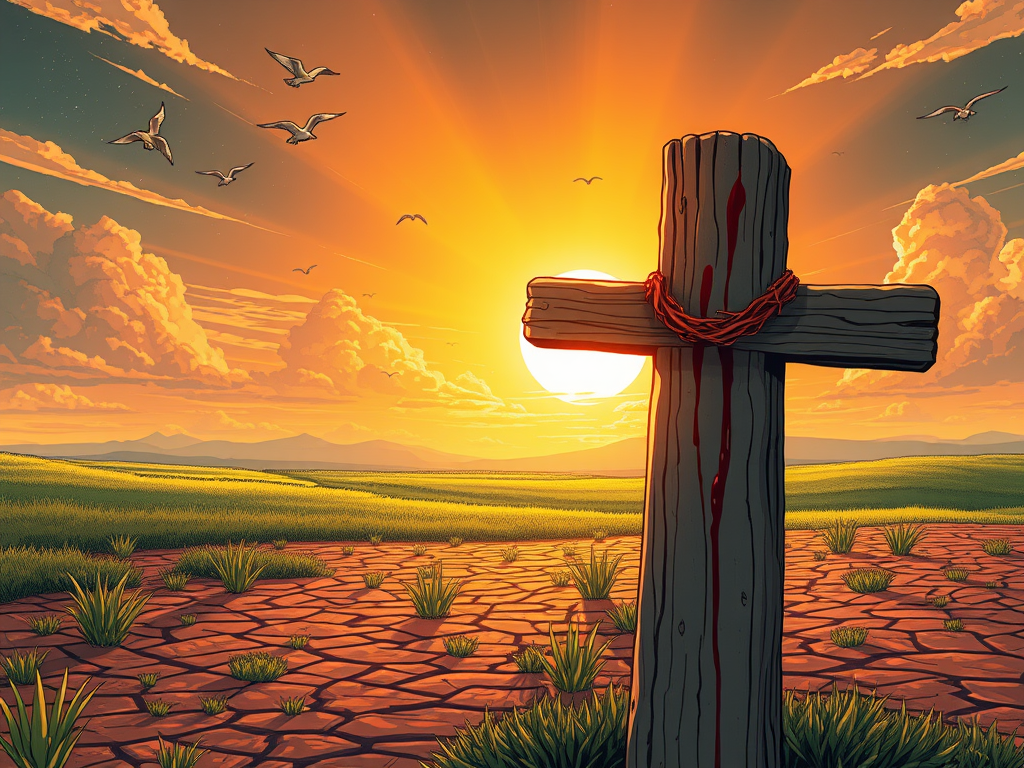
The cross became a throne of steel,
No longer wood, no longer real.
The splinters smoothed by priests in silk,
The blood replaced with wine and milk.
The Lamb who bled beneath the skies
Now looks through gold-encrusted eyes.
They stitched his wounds with Roman thread
And crowned him King—but long since dead.
The sandals left at Jordan’s shore
Now line the halls of sacred war.
His robe, once torn by soldier’s dice,
Is now bespoke, and trimmed with vice.
They took the basin, broke the bowl,
And told the poor to pay their toll.
The temple veil was split and tossed—
Then sewn again at empire’s cost.
They built their cities on his name,
But drained the power from the flame.
The fish became a coat of arms,
The dove, a symbol sent to harm.
The thorns were pressed into a ring,
Then kissed by bishops serving kings.
And Christ, who hung for all to see,
Was locked inside theology.
Now hear this, Rome:
You gave him titles, censored scars,
And used his words to fund your wars.
You traded nails for ivory keys,
And sold salvation by degrees.
You burned the heretics with psalms,
And buried Christ beneath your palms.
You made him Caesar, made him god—
But not the one who walked the sod.
Yet still…
A whisper climbs from Galilee—
A voice not drowned by liturgy.
It speaks in tongues the throne can’t hear,
In deserts dry and caverns clear.
No crown, no robe, no empire flag—
Just love that bleeds and feet that drag.
A Kingdom not of blood and stone—
But one that says: you’re not alone.
Empire Infiltrates the Gospel
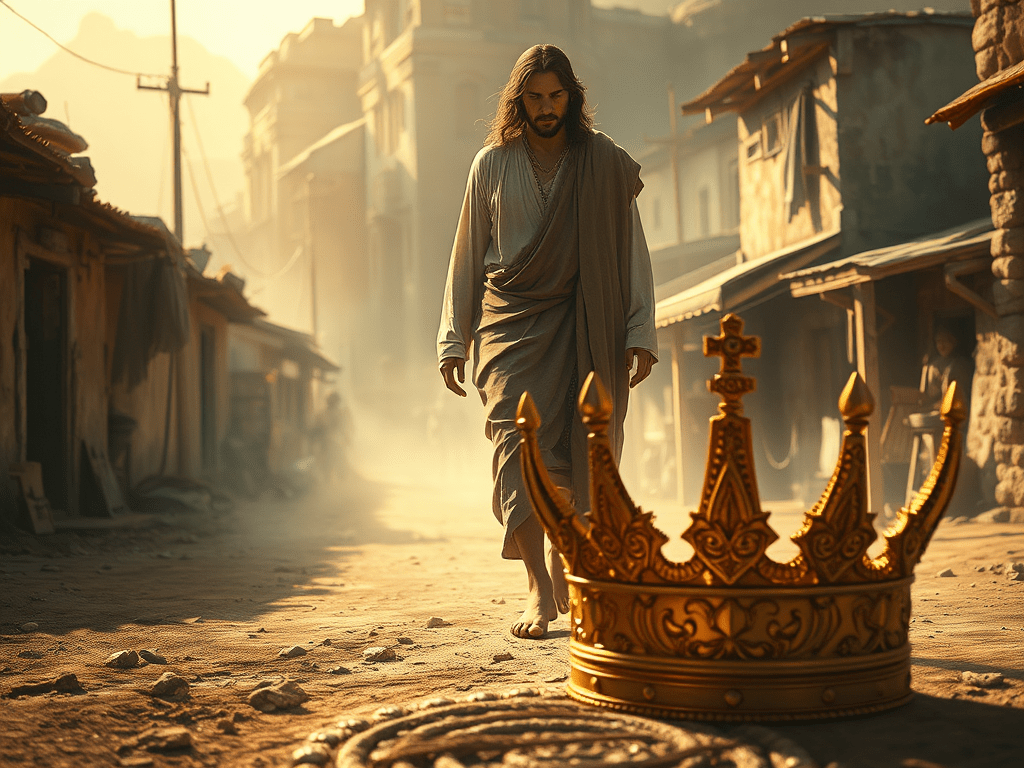
There was once a man who walked barefoot through dusty towns, carrying no sword, writing no book, and refusing every crown. He didn’t build temples or write manifestos. He healed. He wept. He washed feet.
That man—Jesus of Nazareth—carried no seal of earthly power. His kingdom was built from hearts, not armies, and when questioned by Pilate, he said plainly:
“My kingdom is not of this world.”
But somewhere along the way, his cross became a throne.
Savior to Symbol
By the fourth century, Jesus was no longer just the wandering rabbi who turned water into wine—he was the official mascot of Rome. When Emperor Constantine adopted Christianity, the faith that once flourished in catacombs and under persecution was elevated to imperial favor. At first, it seemed like a victory for the followers of Christ. But beneath the surface, a tragic metamorphosis had begun.
The cross, once an instrument of execution and humility, was polished into a throne of gold. The thorns became gilded ornamentation. The sandals were traded for scepters. And the Messiah who once flipped tables in a temple now adorned the walls of palaces, cathedrals, and council chambers—often invoked not to comfort the poor, but to justify the powerful.
Gospel as Governance
It didn’t happen overnight. It never does. Bit by bit, the kingdom not of this world was remade in the image of the very systems Christ challenged. The basin used to wash dirty feet was replaced with marble fonts and jeweled altars. The quiet of the Upper Room gave way to booming rituals inside vaulted cathedrals. The humility of the Shepherd was swallowed up by the hierarchy of the bishopric, dressed in purple and seated beside kings.
And with it came transformation of the message.
- Blessed are the poor became blurred beneath the weight of tax-funded churches.
- Turn the other cheek was drowned out by crusading armies.
- And the Lamb of God was dressed in the regalia of a Roman emperor.
Lament Was Necessary
When such a divine inversion occurs—when the Gospel of peace becomes a tool of empire—you don’t just write a critique. You write a lament.
That’s where the poem was born.
From the grief of watching something sacred be reshaped into something strategic.
From seeing the Galilean’s message militarized and his face used as a banner on a battlefield.
Lines like:
“The cross became a crown,
As thorns were traded in for gold…”
…aren’t poetry for beauty’s sake. They’re poetry because prose alone can’t carry the weight of betrayal.
Kingdom Still Whispers
And yet—through all of it—a whisper survives.
Not the thunder of empire.
Not the politics of priests.
But the gentle whisper of the one who still walks roads with the broken. The one who refused to be enthroned by Caesar or by Constantine. The one who’s still found in humble places—at soup kitchens, prison bedsides, dusty porches, and coffee tables where doubt and hope hold hands.
His kingdom cannot be bought, sold, voted for, or invaded.
It doesn’t live in marble. It lives in mercy.
It’s not declared with banners, but shown in bread broken without condition.
Why I Still Write
Because history forgets.
Because religion repeats.
Because sometimes, in the noise of True Religion, we lose sight of Divine Truth.
So we write songs.
We carve ballads.
We speak in fire and stanza and sacred grief—because somewhere in the sound, He is remembered.



Leave a comment