

Two Paths
There are two distinct ways people seek to find God.
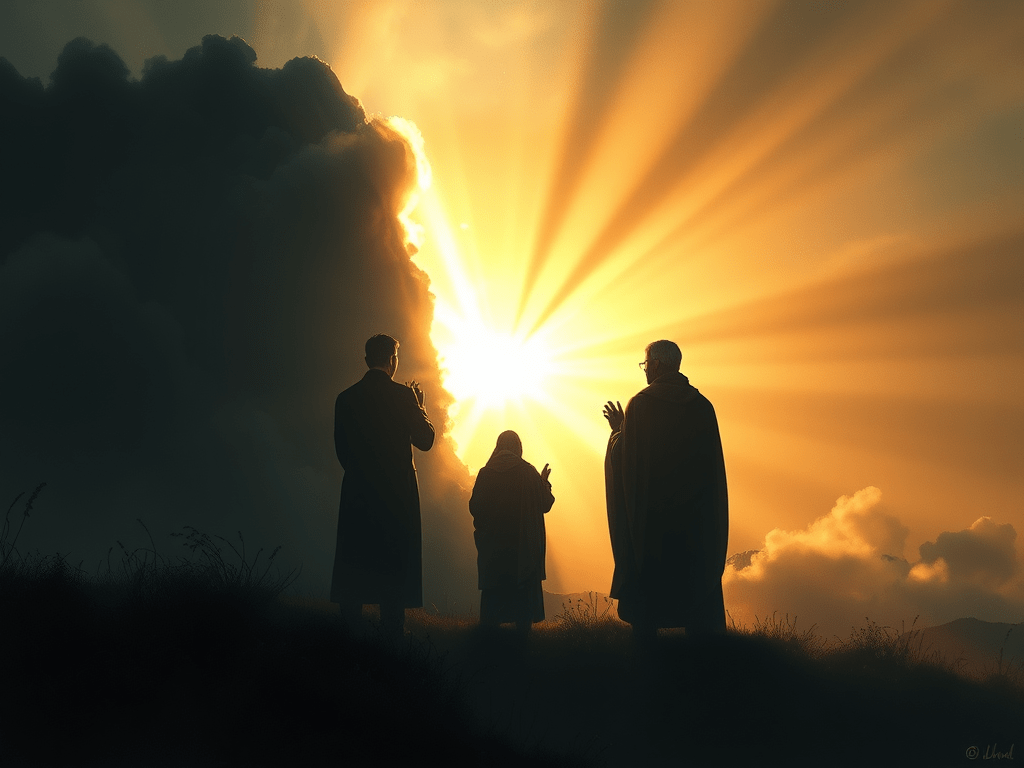
For as long as mankind has existed, it has searched for God. Some turn to sacred books, believing that within their pages lies a divine key—words infused with power, revelations meant to guide the soul. Others seek Him in a different way, away from ink and parchment, through the quiet stirrings of the heart, in whispered prayers, and in the longing gaze toward an endless sky.
Book Path
For millennia, people have turned to sacred texts to understand the divine. These books serve as guides, each offering a different perspective on God, morality, and the nature of existence.
The Bible, central to Christianity, presents God as a personal being who interacts with humanity, offering salvation through Jesus Christ.
“Apply your heart to instruction and your ears to words of knowledge.” (Proverbs 23:12)
The Qur’an, the holy book of Islam, is considered the direct word of God as revealed to Muhammad, providing laws and guidance for righteous living.
“This is the Book about which there is no doubt, a guidance for those conscious of Allah.” (Surah Al-Baqarah 2:2)
In Hinduism, the Bhagavad Gita, part of the larger Mahabharata, contains the philosophical dialogue between Prince Arjuna and Krishna, exploring duty, devotion, and divine wisdom.
“I have imparted to you this knowledge which is more secret than all secrets. Ponder over it deeply, and then do as you wish.” (Bhagavad Gita 18:63)
The Tripitaka, or Pali Canon, in Buddhism, records the teachings of the Buddha, offering a path to enlightenment through mindfulness, discipline, and understanding suffering.
“One should thoroughly learn the Dhamma, uphold it well, examine it with wisdom, and penetrate it deeply.” (Anguttara Nikaya 4.180)
Finally, the Tao Te Ching, attributed to Laozi, presents the Taoist way, emphasizing harmony with the universe through effortless action and natural balance.
“Knowing others is intelligence; knowing yourself is true wisdom. Mastering others is strength; mastering yourself is true power.” (Tao Te Ching, Chapter 33)
Each of these texts claims to illuminate the nature of God or the divine. Some read them devotionally, believing the words themselves hold supernatural power. Others study them analytically, searching for wisdom and moral guidance.
Books about Jesus and the Father are precious—they reveal the teachings of God, they show how He walks with man, but they remain only words on a page. They are alive in the sense that they stir the heart, guiding people toward Him. But they are not the same as God Himself reaching down from the heavens.
Unwritten Path
The second way of learning about God is not through books, but through the constant, quiet pull inside the human heart. A persistent voice, sometimes gentle, sometimes an irritation, whispers, “God is watching, God is here, God is coming.”
Some ignore it. Some choose to listen to others speak about it rather than confronting the call themselves.
But the voice remains.
“Behold, I stand at the door and knock. If anyone hears my voice and opens the door, I will come in and eat with him, and he with me.” (Revelation 3:20)
People across the world, from different ethnicities, races, and cultures, find God not in books, but in life itself.
“The heavens declare the glory of God; the skies proclaim the work of his hands.” (Psalm 19:1)
A fisherman in the Philippines, staring at the vast, endless sea, may feel the presence of something greater than himself as the sunrise paints the horizon.
A mother in rural India, holding her newborn child for the first time, may experience a profound connection to the divine, feeling that life is more than mere biology.
A shepherd in the mountains of Morocco, sitting in solitude under a canopy of stars, may sense an unseen presence, whispering in the silence.
In moments of great joy—a musician lost in the rhythm of a song, a dancer moving freely under the night sky, a poet capturing raw emotion in words—people touch something beyond themselves.
In moments of suffering—a man losing his wife to illness, a prisoner contemplating the consequences of his actions, a refugee wandering an unknown land with nothing but hope—God is often sought, not through a book, but in the quiet cries of the heart.
Many pray without scripted words, simply speaking to the air, hoping Someone is listening. Others seek signs, watching for meaning in the randomness of life. Some hear God in the wisdom of an elder, passed down through generations, while others find Him in the embrace of a stranger who shows kindness at the right moment.
These experiences are not confined to any one faith or culture. They are universal, found in the ordinary and the extraordinary, in silence and in suffering, in nature and in the human heart.
In the Silence
Perhaps the truest way to find God is not through endless study, nor by relying on others to define Him, but by stepping away from the noise. The books, the teachers, the debates, the distractions—all of them can be valuable, but they can also drown out the simple act of listening.
“For God speaks in one way, and in two, though man does not perceive it.” (Job 33:14)
To find God, one does not need a book. One needs only a moment of silence, a deep breath, and an honest heart lifted toward the unknown. And then, in that stillness, in that openness, one might finally hear the voice that has been speaking all along.
“Your ears shall hear a word behind you, saying, ‘This is the way, walk in it,’ whenever you turn to the right hand or whenever you turn to the left.” (Isaiah 30:21)
The irony is that mankind does not need a book to recognize the existence of God, as creation itself speaks of a divine presence. Yet, the moment mankind discovers God, they feel compelled to write about Him, capturing their revelations in sacred texts. In doing so, they create guides for others to follow, even though God was evident all along.
Soul Path
Then comes the final irony—when death draws near, and all is stripped away, the soul cries out with nothing but raw desperation, trembling on the edge of eternity, pleading for mercy.
“Then he said, ‘Jesus, remember me when you come into your kingdom.’ And Jesus said to him, ‘Truly, I tell you, today you will be with me in paradise.’” (Luke 23:42-43)
There is no theology in a man’s final breath, no debate in a drowning man’s plea. It is the most pure and honest way to seek the divine, free from noise, stripped of ego, a moment when the soul remembers.
“Save me, O God! For the waters have come up to my neck. I sink in deep mire, where there is no foothold; I have come into deep waters, and the flood sweeps over me.” (Psalm 69:1-2)
Throughout scripture, we see moments where individuals stand at the threshold of death. In these final breaths, all distractions fall away, leaving only the raw and unfiltered cry of the soul—not arguments, not tradition, but an appeal to something beyond this world.
Stephen, the first martyr of Christianity, as he is stoned to death, lifts his eyes toward heaven and prays,
“Lord Jesus, receive my spirit” (Acts 7:59).
Jesus Himself, hanging on the cross, echoes the same surrender:
“Father, into Your hands I commit My spirit” (Luke 23:46).
Even in the Old Testament, death often comes with a moment of awareness, a turning toward something beyond the physical world. Jacob, feeling the end near, gathers his children, blesses them, and “breathed his last and was gathered to his people” (Genesis 49:33), a phrase suggesting a passage into another realm.
The Bible repeatedly shows that in the face of death, whether one is righteous or regretful, the final moments are not filled with intellectual debates or theological complexities, but with surrender. Some, like Jesus and Stephen, die with confidence, fully trusting in God. Others, like the thief on the cross, realize too late but still grasp for grace at the last possible moment.
This is the final irony of life. Whether a person has spent their days seeking God or ignoring Him, at the brink of eternity, when all else fades, the soul remembers. In that moment, there is no book, no teacher, no philosophy—only a trembling voice, whispering into the unknown, hoping that Someone is listening.
Knowing Creation vs. Word
Paul, in his letter to the Romans, makes what seems to be two conflicting statements about how people come to know God. First, he declares that God is evident in creation, meaning that no one has an excuse for not recognizing His existence:
“For what can be known about God is plain to them, because God has shown it to them. For his invisible attributes, namely, his eternal power and divine nature, have been clearly perceived, ever since the creation of the world, in the things that have been made. So they are without excuse.” (Romans 1:19-20)
Paul argues that nature itself is a witness—the vastness of the heavens, the order of life, and the intricate balance of existence all point to a Creator. This means that even without books, scriptures, or religious teachers, people should recognize that something greater exists. The evidence of God is woven into the fabric of the universe, and man’s failure to acknowledge it is not due to a lack of knowledge but a rejection of what is obvious.
Yet later in the same letter, Paul shifts his focus, saying that faith comes not through seeing but through hearing:
“How then will they call on him in whom they have not believed? And how are they to believe in him of whom they have never heard? And how are they to hear without someone preaching?” (Romans 10:14)
“So faith comes from hearing, and hearing through the word of Christ.” (Romans 10:17)
At first glance, this seems like a contradiction. If God is evident through nature, why does anyone need to hear the Gospel? The answer is in the distinction between general revelation and specific revelation.
- General revelation is what every person sees—the vastness of the sky, the rhythm of the seasons, the deep pull of conscience that suggests life has meaning. It is enough to make a person aware of God’s existence but not enough to explain who He is or what He desires.
- Specific revelation is where the written and spoken word comes in—the scriptures, the prophets, the teachings of Jesus. These are necessary because while nature reveals that God exists, it does not reveal how to be reconciled with Him.
He is saying that while everyone has the ability to recognize God through creation, the message of salvation through Christ must be heard, received, and believed. A person standing on a mountaintop can feel the presence of something greater, but they will not understand the cross, grace, and redemption unless they hear the message preached.
This is the great divide—to know of God is one thing, but to know Him is another. One comes through creation, the other through revelation, and only in their union does the soul truly understand.
The Justice of God
God has always provided evidence of Himself through creation, and that no person is completely ignorant of His existence. Even those who have never heard the name of Christ have access to the knowledge of God through the natural world—the stars, the mountains, the moral law written in their hearts.
Furthermore, Romans 2:14-16 reveals another key aspect of divine justice:
“For when Gentiles, who do not have the law, by nature do what the law requires, they are a law to themselves, even though they do not have the law. They show that the work of the law is written on their hearts, while their conscience also bears witness, and their conflicting thoughts accuse or even excuse them on that day when, according to my gospel, God judges the secrets of men by Christ Jesus.”
This implies that God judges people according to the knowledge they have received. Those who have never heard the Gospel are still held accountable for how they respond to the truth available to them—whether through creation, conscience, or whatever divine light they have been given.
Mystery Beyond Knowledge
Jesus made an exclusive claim:
“I am the way, and the truth, and the life. No one comes to the Father except through me.” (John 14:6)
This has led many to conclude that without explicit faith in Christ, salvation is impossible. However, this does not necessarily mean that those who never heard the Gospel are automatically condemned. Scripture reveals that God’s mercy extends beyond human comprehension.
Consider Job, a man outside the covenant of Israel, yet one whom God declared righteous. Consider Melchizedek, a priest of God long before the Mosaic Law. These figures suggest that God has always had ways of drawing people to Himself, even outside of direct revelation.
Additionally, 1 Peter 3:18-20 describes Christ preaching to the spirits in prison, a mysterious passage that some interpret as Jesus offering salvation to those who died before hearing the Gospel. This, combined with Romans 2, hints that God may judge individuals based on how they responded to the knowledge of Him available in their time and place.
The Final Resolution
The real question behind all of this is whether God is just. If we believe that God is righteous, then we must trust that He will deal fairly with those who never had the chance to hear the Gospel. He does not condemn people for what they could not have known, but for how they responded to what they did know.
The book of Genesis 18:25 reminds us:
“Shall not the Judge of all the earth do what is just?”
At the end of the debate, the answer is not found in human logic, but in trusting that God is more merciful, more just, and more compassionate than we can comprehend. The mystery of salvation is vast, but what is certain is that no one will stand before God and find Him unjust.
For those who have heard, the calling is clear—to believe, to follow, to proclaim. But for those who have not, the Judge of all the earth will do what is right. His justice is flawless, His mercy unfathomable, and in the end, none will find Him unjust.
Source Appendix
Scriptural References
- Proverbs 23:12 –
“Apply your heart to instruction and your ears to words of knowledge.”
– The wisdom of engaging with sacred texts and internalizing truth. - Surah Al-Baqarah 2:2 (Qur’an) –
“This is the Book about which there is no doubt, a guidance for those conscious of Allah.”
– Islam’s affirmation of divine instruction. - Bhagavad Gita 18:63 –
“I have imparted to you this knowledge which is more secret than all secrets. Ponder over it deeply, and then do as you wish.”
– God gives guidance while honoring human choice. - Anguttara Nikaya 4.180 (Tripitaka) –
“One should thoroughly learn the Dhamma, uphold it well, examine it with wisdom, and penetrate it deeply.”
– Buddhist encouragement to engage deeply with sacred teachings. - Tao Te Ching, Chapter 33 –
“Knowing others is intelligence; knowing yourself is true wisdom. Mastering others is strength; mastering yourself is true power.”
– Taoist reflection on inner knowledge and harmony. - Revelation 3:20 –
“Behold, I stand at the door and knock. If anyone hears my voice and opens the door, I will come in and eat with him, and he with me.”
– God’s invitation to intimacy through personal response. - Psalm 19:1 –
“The heavens declare the glory of God; the skies proclaim the work of his hands.”
– Creation as witness to divine glory. - Job 33:14 –
“For God speaks in one way, and in two, though man does not perceive it.”
– A mysterious God, often whispering beyond perception. - Isaiah 30:21 –
“Your ears shall hear a word behind you, saying, ‘This is the way, walk in it,’ whenever you turn to the right hand or to the left.”
– Guidance in the stillness, outside the book, inside the heart. - Luke 23:42–43 –
“Then he said, ‘Jesus, remember me when you come into your kingdom.’ And Jesus said to him, ‘Truly, I tell you, today you will be with me in paradise.’”
– Grace at the final moment, requiring no theological mastery. - Psalm 69:1–2 –
“Save me, O God! For the waters have come up to my neck…”
– A cry of desperation, universal and ancient. - Acts 7:59 –
“Lord Jesus, receive my spirit.”
– Stephen’s surrender in martyrdom. - Luke 23:46 –
“Father, into Your hands I commit My spirit.”
– Jesus entrusting His soul to the Father. - Genesis 49:33 –
“When Jacob had finished commanding his sons, he drew up his feet into the bed and breathed his last and was gathered to his people.”
– The transition from life to afterlife in Old Testament imagery. - Romans 1:19–20 –
“For what can be known about God is plain to them…”
– Creation as general revelation, making God perceivable to all. - Romans 10:14, 17 –
“So faith comes from hearing, and hearing through the word of Christ.”
– The necessity of specific revelation for understanding salvation. - Romans 2:14–16 –
“…they are a law to themselves…”
– God’s justice based on conscience and inner awareness of right. - John 14:6 –
“I am the way, and the truth, and the life. No one comes to the Father except through me.”
– The exclusivity of Christ as the door to the Father. - 1 Peter 3:18–20 –
“…He went and proclaimed to the spirits in prison…”
– Mysterious reference to Christ’s message beyond death. - Genesis 18:25 –
“Shall not the Judge of all the earth do what is just?”
– Abraham’s rhetorical anchor of divine justice.
Theological & Philosophical Themes
- General vs. Special Revelation
– Nature reveals God’s existence (Romans 1), but salvation requires hearing (Romans 10). - Cultural Universality of Divine Longing
– Reflected in fishermen, shepherds, mothers, musicians, poets, refugees, and martyrs. - The Soul’s Cry at Death
– Beyond books and doctrines, the final breath is raw surrender. (See Luke 23, Psalm 69) - God’s Justice & Mercy in Unknowns
– Paul’s teaching in Romans 2 affirms conscience-based accountability. - Jesus’ Unique Role
– John 14:6 affirms Jesus as the exclusive way, but other passages suggest divine flexibility rooted in fairness and love.
Philosophical Anchors
- Mystery Beyond Knowledge
– Faith in God’s justice supersedes logical conclusions (Romans 11:33 implied). - The Irony of Sacred Texts
– God can be known without them, but we write because we’ve met Him. - Death as the Equalizer of Theology
– At the edge of eternity, doctrine falls silent and the soul remembers.



Leave a comment