
Illusion of Singularity
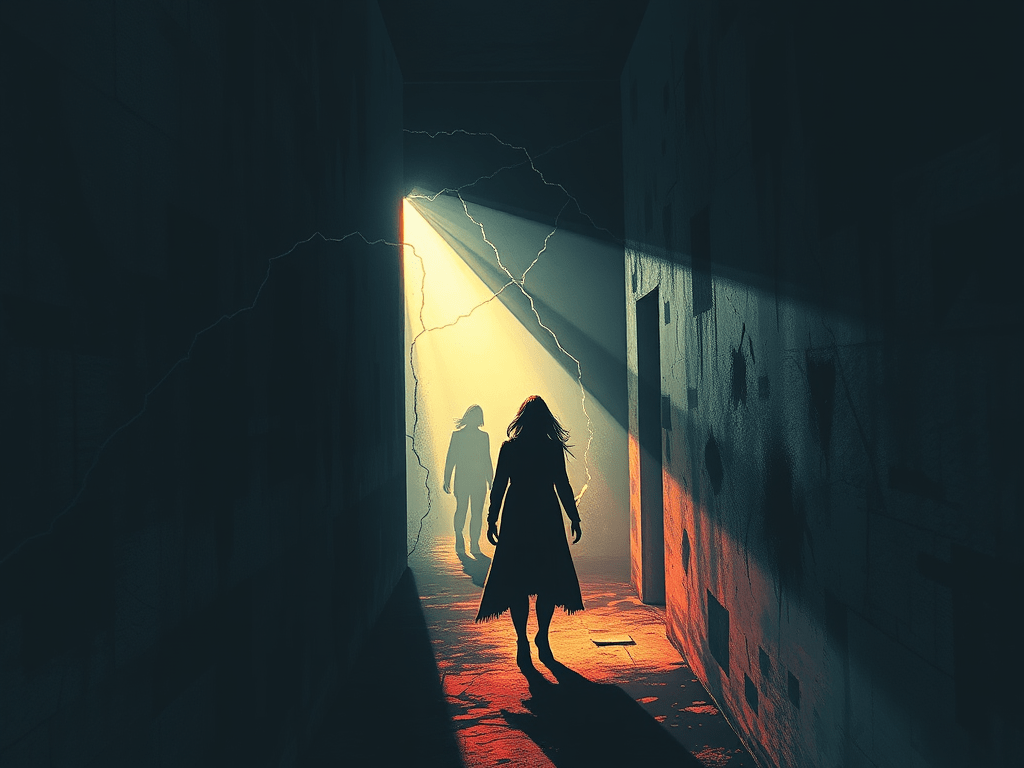
Let’s dive into the darkest corridors of the human psyche and the heart’s core, where we encounter shadows dancing vividly and secrets lurking silently. Realize during this exploration is not merely about embarrassment; rather, it’s finding a tapestry of woven threads with guilt, shame, alienation, and distorted self-perception.
“Whoever conceals his transgressions will not prosper, but he who confesses and forsakes them will obtain mercy.”
Proverbs 28:13
Within these corridors of secrecy, I’ve witnessed others—just as I have done too—locking away parts of ourselves, clutching tightly to the belief that our hidden sins and transgressions are not just shameful, but exceptional in their shame.
We don’t merely think we have done wrong; we believe our wrongness is unlike anyone else’s, that our failures are so uniquely grotesque—so unspeakably twisted—that no one could possibly understand, much less forgive us. We see ourselves as outliers of brokenness, convinced our darkness exists outside the shared human experience, forming an isolating chasm that no one else could ever cross.
Yet, I know as you read these words, certain thoughts, memories, and hidden truths inevitably surface within your mind—things you’ve never dared mention aloud, because secrecy feels like your only lifeline … me too, there will be things I will never share with another human being.
Believe me, I deeply understand—it is unbearably frightening to imagine those profoundly dark and hidden places suddenly illuminated, exposed for the entire world to see. The mere thought of standing vulnerably before others, with the shadows of your inner life openly displayed, can feel like an existential nightmare.
The Apostle Paul cautioned clearly about these hidden things when he wrote:
“For it is shameful even to speak of the things that they do in secret.”
Ephesians 5:12
While scripture profoundly illuminates the moral and spiritual dimensions of hidden shame and secrecy, there is immense value in venturing further still—delving now into a deeper psychological understanding.
Let us pivot thoughtfully toward insights from eminent psychologists, who have meticulously studied the mechanisms of shame, isolation, and distorted self-perception.
Shame of Uniqueness
According to psychologist Dr. Brené Brown, shame comes from believing a lie—the idea that our hidden actions are uniquely terrible or worse than anyone else’s.
Brown poignantly emphasizes,
“Shame corrodes the very part of us that believes we are capable of change.”
Shame creates isolation because people mistakenly think their hidden sins are strange and unlike anyone else’s. Dr. Brené Brown calls this false belief the “illusion of singular shame.”
Shame of Only Me
Clinical psychologist Carl Rogers explains a surprising truth about being human: the more personal and private a problem feels, the more likely it is that many others experience the same thing.
Rogers famously asserted,
“What is most personal is most general.”
My friend, it’s okay to come out from that dark hallway of shame. Let the heaviness you feel softly fade away, because you’re not alone—not even close. What you carry is shared by so many hearts, quietly beating alongside yours.
The thought that your mistakes or struggles make you different or worse than others is simply not true. It’s just a cruel trick—an illusion designed to keep you away from the gentle warmth of love, acceptance, and belonging that waits patiently, always ready to embrace you.
Anchor of Desolation
Strangely, even though I offer this soft warmth calls out, a part of us hesitates and quietly steps away back into the comfort of our shadows.
The thought of stepping into the light feels wrong—unnatural. The darkness has not just surrounded us; it has become part of us. Its weight is familiar, its silence is safe.
“Before I go—and I shall not return— to the land of darkness and deep shadow, the land of gloom like thick darkness, like deep shadow without any order, where light is as thick darkness.”
Job 10:21-22
The world outside moves on, untouched by the hollow space you occupy. Loneliness is no longer something you experience—it is something you are. You no longer wait for someone to call your name because no one ever does.
“We hope for light, and behold, darkness, and for brightness, but we walk in gloom. We grope for the wall like the blind; we grope like those who have no eyes; we stumble at noon as in the twilight, among those in full vigor we are like dead men.”
Isaiah 59:9-10
You’ve grown so used to hiding, to shrinking, to keeping your face turned away from the world, that the idea of being truly seen, truly accepted, is no more real than the fractured dreams that haunt you in the quiet hours of the night.
“For the enemy has pursued my soul; he has crushed my life to the ground; he has made me sit in darkness like those long dead. Therefore my spirit faints within me; my heart within me is appalled.”
Psalm 143:3-4
Even in your most fragile dreams, where arms might reach for you and voices might call you home, there is always something pulling you back. An anchor chained to your soul. A weight that refuses to let you go.
Because the shadows have claimed you. And after so long in the dark, you no longer know how to want the light.
God Can’t Even Help Me
And yet—this belief that even God could never understand the depth of your darkness? That your pain is too foreign, too twisted for Him to comprehend? That, my friend, is the greatest lie of all.
If the deepest shadows of a man’s soul were truly beyond His reach, then why are they written so plainly in the very pages of scripture? Why does the Bible not turn away from the cries of a crushed spirit, a hollowed-out heart, a man drowning in despair?
The Word of God does not flinch at the depths of human suffering—it records them, engraves them into eternity, so that no one could ever say, “God cannot possibly understand where I am.”
He sees it all—the nights you’ve curled in on yourself, the moments you’ve whispered “Let me fade.” He knows exactly how it feels to be abandoned, unheard, unseen. And still, He calls to you—not to shame you, not to demand you fix yourself first, but simply to sit with you in the darkness until you’re ready to rise.
Because you will rise.
And when you do, you won’t have to walk alone.
“The Lord is near to the brokenhearted and saves the crushed in spirit.”
Psalms 34:18
My friend, know this: the gentle embrace of authentic connection awaits you—not because you’re flawless, but precisely because you are human, beautifully imperfect, and fully worthy of love.
Bridging the Chasm
How, then, does one transcend this toxic isolation and reclaim their genuine identity?
Through careful and compassionate self-disclosure, we begin to dismantle the illusion that our shame is unique. What once felt isolating and unbearable is, in reality, part of the shared human experience—not an exception, but a truth that unites us all. This realization can be profoundly cathartic, reshaping the way we see ourselves and restoring the empathy we so often deny ourselves.
But, my friend, this is not a silent work. Shame thrives in secrecy, and to break its grip, you must do something many have never done before:
Speak it aloud.
Not in your mind.
Not in your thoughts.
Not in whispered fragments within your imagination.
But out loud—with your voice, into the air, where only God hears you.
Find a quiet place, a secure space where no one will hear you except the One who always listens. Stand before the sky, before the open space, before the invisible presence that has never left you—and speak. Say it out loud.
Say what you’ve hidden.
Say what you’ve buried.
Say what you are ashamed of.
Tell Him—the One who already knows, yet still waits to hear it from your lips.
Say:
“God, here it is. Here is what I have done. Here is what I have feared to speak. Here is my sin, my shame, my brokenness. I hold nothing back. I do not hide from You anymore.”
And then, ask.
“Help me.”
“Forgive me.”
“Heal me.”
Because this is the moment when the weight begins to lift.
Not because you have suddenly become perfect, but because you have stopped carrying it alone.
The act of speaking aloud—of hearing your own voice confessing these hidden things—shatters the illusion that you are alone in them. It is the first step toward honesty with yourself, the first act of breaking free from secrecy, and the first real moment of reaching toward the mercy that has always been waiting for you.
Say it.
Speak it.
Let God hear it.
And then, step into the mercy that has already been given.
Embracing Humanity
My friend, you have seen what shame does—how it isolates, distorts, and convinces us that we are too far gone, too different, too stained to ever belong. You have felt its weight press into your soul, whispering that you are alone.
But you are not alone.
The very struggles you believed made you an outcast are the same struggles shared by countless others—by all of us. The pain you thought was unspeakable is written in scripture, etched into the stories of those who came before you. Their cries, their questions, their desperate longing for hope—they are our cries, our questions, our longing too.
And what have we found in this journey? That the illusion of singular shame is just that—an illusion. That the lie of unworthiness cannot stand against the reality of grace. That light is not the enemy, and that to be fully known is not to be condemned, but to be freed.
Now comes the moment of decision.
Do you remain in the familiarity of shadows, where pain is known and predictable?
Step forward, not into perfection, not into instant healing, but into honest belonging—where you are seen, accepted, and loved as you are?
This is what it means to embrace our humanity—to understand that we were never meant to carry our burdens alone, that to be human is to struggle, to fall, to rise, and to be held by hands far greater than our own.
There is only the invitation to step forward—to speak, to be heard, to be healed.
And when you do, you will find that God was never far.
He was always there, waiting.
Waiting for you to let go.
Waiting for you to finally believe you were always worthy of love.
Source Appendix
Scriptural References
- Job 10:21–22
“Before I go—and I shall not return—
to the land of darkness and deep shadow,
the land of gloom like thick darkness,
like deep shadow without any order,
where light is as thick darkness.” - Psalms 34:18
“The Lord is near to the brokenhearted and saves the crushed in spirit.” - Psalm 143:3–4
“For the enemy has pursued my soul;
he has crushed my life to the ground;
he has made me sit in darkness like those long dead.
Therefore my spirit faints within me;
my heart within me is appalled.” - Proverbs 28:13
“Whoever conceals his transgressions will not prosper,
but he who confesses and forsakes them will obtain mercy.” - Isaiah 59:9–10
“We hope for light, and behold, darkness,
and for brightness, but we walk in gloom.
We grope for the wall like the blind;
we grope like those who have no eyes;
we stumble at noon as in the twilight,
among those in full vigor we are like dead men.” - Ephesians 5:12
“For it is shameful even to speak of the things that they do in secret.”




Leave a comment