
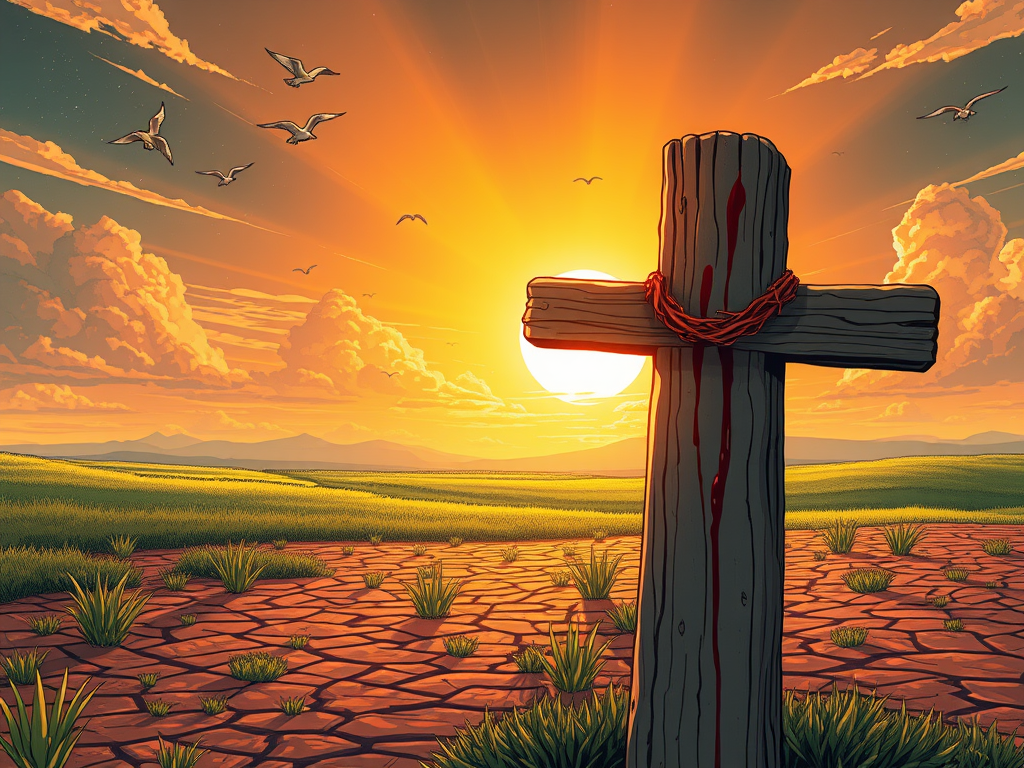
Truth We Must Face
The day I believe I have fully understood God is the day I have become a fool. To think that the Almighty can be contained in human logic, measured by our intellect, or neatly defined by doctrine is the height of arrogance.
And yet, we do it all the time.
We speak of giving God glory as if He needs it. We act as though our prayers inform Him, our worship sustains Him, our faith enables Him, and our righteousness impresses Him. But if we truly understood His glory, we would see how foolish these ideas are.
God does not need us. We need Him.
The moment I grasped this truth, I was undone. Every assumption I had about my relationship with Him crumbled. I realized that all my attempts to make myself more spiritual, more righteous, or more useful to God were rooted in pride. I was trying to bring something to the table, not realizing that He is the table, the meal, the feast, and the very breath in my lungs.
True encounter with God’s glory does not elevate—it humbles.
An Imaginary God
There is a dangerous comfort in believing we have figured God out. We like the idea that we have Him categorized, structured, and predictable. It allows us to feel like we are in control, like we have the right answers, the correct theology, the full understanding. But that is not faith—it is illusion.
God warns against this kind of self-made knowledge because it creates a false image of Him in our minds. When we define God on our own terms, we do not worship Him—we worship our idea of Him.
The Israelites did this in the wilderness. They wanted a visible, understandable God, so they made one for themselves:
“Then they made a calf in those days, offered sacrifices to the idol, and rejoiced in the works of their own hands.” (Acts 7:41)
When the Israelites crafted the golden calf, it was not a random choice. It wasn’t as if someone haphazardly picked an animal out of thin air. They didn’t carve a lion, an eagle, or even a lamb. Instead, they deliberately chose a calf—a young bull. There was a reason for that choice, and it reveals far more than just their impatience.
The Israelites had just come out of Egypt, a land saturated with idol worship, and the most dominant sacred animal they had encountered for generations was the Apis bull. This wasn’t just any animal—it was believed by the Egyptians to be a living representation of the divine, a symbol of strength, power, fertility, and divine provision.
The calf became a bridge between their fears and their desire to worship.
The Israelites did not reject Yahweh outright; instead, they reshaped Him into something they could manage. In their minds, they were still worshiping the God who brought them out of Egypt, but now He was a form they could see, touch, and stand before without trembling.
That was the real offense—not just that they made an idol, but that they misrepresented God. They took the wild, uncontrollable, all-consuming fire of the Almighty and forged Him into something they could place on an altar.
And that was the very thing God had warned them about.
The Heart of Idolatry
The sin of the golden calf was simply about wanting a faith that fit their understanding, worship that fit their preferences, and a deity that could be seen and touched rather than one who dwelled in unapproachable fire and holiness.
This is why idolatry is still so dangerous today—because it is not just about worshiping false gods, but about misrepresenting the true God. The moment we reshape Him to fit our understanding, we have already built a golden calf.
God is not manageable. He is not containable. He is not a calf we can dress in gold and declare, ‘This is our God.’
This is why He commanded:
“You shall not make for yourself an image in the form of anything in heaven above or on the earth beneath or in the waters below.” (Exodus 20:4)
Because the moment we reduce God to a form we can grasp, we have already diminished Him.
A God We Cannot See
This is our choice today as well. Do we trust God as He is—vast, uncontainable, beyond full comprehension—or do we try to fit Him into our own understanding, our own systems, our own preferences?
True humility does not seek to control God—it bows before Him. It accepts that He will not always make sense, He will not always be visible, and He will never be under our control.
“God opposes the proud but gives grace to the humble.” (James 4:6)
The proud reshape God to fit themselves.
The humble reshape themselves to fit God.
The more we think we understand Him, the less we actually see Him.
“The fear of the Lord is the beginning of wisdom, and knowledge of the Holy One is understanding.” (Proverbs 9:10)
True wisdom begins with reverence, not conclusions.
Path of Destruction
Pride convinces us that we have figured out God’s ways. But the moment we think we know where He is leading, we stop actually following.
Jesus warned about this when He said:
“Enter through the narrow gate. For wide is the gate and broad is the road that leads to destruction, and many enter through it.” (Matthew 7:13)
A surrendered heart follows God even when the path is unclear, trusting that His ways are higher than human understanding. A heart filled with self-reliance will always choose the wider road, one that feels logical and secure, because it refuses to accept a God who cannot be fully grasped or controlled.
Many start out on the narrow path but never truly follow it because they choose their own understanding instead of humility before God. They try to merge faith with their own logic, making a safer, more palatable, more reasonable version of Christianity. That road leads away from Him, not toward Him.
“Trust in the Lord with all your heart and lean not on your own understanding.” (Proverbs 3:5)
Trust does not demand explanations—it acknowledges that a real God, an infinite God, an eternal God, must, by nature, be beyond our comprehension. If the path of God made perfect sense to us, it would mean He is operating on our level rather than His own. If every answer fit within our reasoning, then He would not be the God who formed the heavens, who exists outside of time, and whose wisdom stretches beyond eternity.
The expectation of a real, all-powerful, all-knowing God is that His ways will confound human wisdom, shatter expectations, and demand trust over understanding. True surrender is not just following Him when the path is unclear—it is realizing that if the path were always clear, it wouldn’t be God’s path at all.
Fake Relationships
We claim to have a relationship with God, but if we do not approach Him with surrendered reverence, do we really know Him at all?
It is easy to assume we know God while still holding onto our own pride, control, and intellectual superiority. Throughout history, people have convinced themselves they were walking with God, while in reality, they were standing before Him on their own terms, not His.
The Fake Teacher
One of the clearest examples of approaching God without true surrender is found in the Pharisees. They were the most educated, disciplined, and outwardly righteous people of their time, and yet, they did not truly know God. They memorized Scripture, enforced the Law, and performed religious rituals, believing that their knowledge and adherence proved their devotion.
But Jesus exposed them, revealing that their relationship with God was nothing more than self-righteous arrogance.
“You study the Scriptures diligently because you think that in them you have eternal life. These are the very Scriptures that testify about Me, yet you refuse to come to Me to have life.” (John 5:39-40)
They knew all about God but refused to know Him. They thought intellect, rules, and tradition could replace a surrendered heart. Their approach was not one of true reverence, but of control, as if God could be grasped through their efforts and formulas.
The Fake Brother
Another tragic example is Cain’s offering in Genesis. Abel’s sacrifice was given in faith and surrender, acknowledging God’s supremacy and worthiness. Cain, on the other hand, brought an offering on his own terms. He gave what he decided was acceptable, not what God required.
When his offering was rejected, he did not humble himself and seek God’s will—he became bitter and sought to remove the one whose worship was accepted.
“But on Cain and his offering He did not look with favor. So Cain was very angry, and his face was downcast.” (Genesis 4:5)
Cain’s approach to God is still alive today, seen in those who assume their version of faith is enough, even when it does not align with what God actually requires. Many believe that because they attend church, serve, or live morally, their offering is acceptable. The real test comes when they are confronted with the truth. When someone’s false sense of relationship with God is exposed, their reaction often mirrors Cain’s: anger, resentment, and defensiveness.
The tell-tale sign of a heart that is not surrendered is its response to correction. Instead of humbling themselves, they become bitter toward those who walk in true obedience. Cain was not angry at God—he was angry at Abel, the one whose offering was accepted. This same pattern plays out today when people who have built a faith on their own terms lash out at those who challenge them to submit fully to God’s ways. They reject the idea that they might be wrong and instead turn their frustration toward those who walk in surrender.
This is why some people react with hostility when confronted with Scripture that challenges their beliefs. Rather than seeking God with a broken and contrite heart, they dismiss the truth as judgmental, rigid, or outdated—all while defending their self-made version of Christianity. Just like Cain, their frustration is not really with people, but with the reality that God does not accept worship on human terms. A truly surrendered heart responds with repentance; a heart filled with pride responds with resistance.
The Fake Leader
The same attitude was seen in King Saul, when he took it upon himself to offer sacrifices without waiting for Samuel, the prophet. Saul assumed his actions were enough—he thought that his role, his position, and his good intentions were all that mattered. He was not truly surrendered to God’s authority; he still believed he could shape obedience to fit his circumstances.
“You have done a foolish thing,” Samuel said. “You have not kept the command the Lord your God gave you; if you had, He would have established your kingdom over Israel for all time. But now your kingdom will not endure; the Lord has sought out a man after His own heart and appointed him ruler of His people, because you have not kept the Lord’s command.” (1 Samuel 13:13-14)
Saul’s lack of surrender cost him everything. He thought that partial obedience was enough—but partial obedience is still disobedience. He approached God without reverence, treating Him as a system to be managed rather than a King to be obeyed.
The Failure of the Fake
Perhaps the most sobering example comes from Jesus’ own words, where He speaks of people who thought they knew Him, yet He declares He never knew them.
“Many will say to me on that day, ‘Lord, Lord, did we not prophesy in your name and in your name drive out demons and in your name perform many miracles?’ Then I will tell them plainly, ‘I never knew you. Away from me, you evildoers!’” (Matthew 7:22-23)
These people called Him Lord. They did miraculous works in His name. And yet, they did not actually know Him. They approached Him without true surrender—they assumed that their works, their power, and their spiritual performance meant they had a relationship with God. But the relationship they believed in was one-sided, built on their own terms rather than on submission to Him.
This is the great deception of pride—it allows a person to convince themselves they are close to God, when in reality, they have never truly bowed before Him. To approach without surrender is to approach in presumption, and God does not accept those who come with their own conditions.
True relationship with God begins only when we recognize that we do not define the terms—He does. It is not our knowledge, religious activity, or perceived righteousness that makes us His; it is our absolute surrender to Him as Lord.
If we do not humble ourselves before God, our faith is nothing more than an intellectual exercise.
Blind Lead the Blind
People love certainty and will flock to those who claim to have all the answers. But Jesus warned against following those who think they see clearly but do not.
“If the blind lead the blind, both will fall into a pit.” (Matthew 15:14)
Pride does not just destroy the one who holds it—it destroys everyone who follows. When people follow teachers, leaders, or theologians who present a god they can fully explain, they are being led into a ditch.
No human fully understands God. Anyone who claims to have mastered Him in knowledge is leading others into spiritual blindness.
The Fall of Lucifer
The fall of Lucifer, as described in Isaiah 14:13-15, is one of the clearest warnings in Scripture about the consequences of rejecting humility. Pride was not just the first sin in creation—it was the first rejection of humility before God. Before mankind ever fell, before the first temptation was whispered to Eve, Lucifer’s own heart became lifted up against God.
“You said in your heart, ‘I will ascend to the heavens; I will raise my throne above the stars of God. I will sit enthroned on the mount of assembly, on the utmost heights of Mount Zaphon. I will ascend above the tops of the clouds; I will make myself like the Most High.’ But you are brought down to the realm of the dead, to the depths of the pit.” (Isaiah 14:13-15)
Lucifer’s pride was not merely arrogance—it was the belief that he deserved more than what God had given him. He was created as one of the most exalted beings, yet instead of bowing in gratitude, he demanded elevation.
Understanding the Rebellion
This passage tells us that Lucifer’s pride began in his heart:
“You said in your heart, ‘I will ascend to the heavens…’”
But do angels even have hearts? What does this mean? In Hebrew, the word לֵב (lev), translated as “heart,” does not simply refer to emotion or feeling—it means the seat of will, desires, and decision-making. Even though angels do not have physical bodies, they do have the ability to think, to choose, to desire, and to act.
Scripture shows us that angels are not mindless robots:
- They rejoice when sinners repent (Luke 15:10).
- They long to understand the mysteries of salvation (1 Peter 1:12).
- They are capable of rebellion, as seen in the fall of Lucifer and the fallen angels (2 Peter 2:4, Jude 1:6).
Lucifer’s heart, his inner will, was lifted in pride. But pride is the opposite of humility. Instead of bowing before God in submission, he stood before God in entitlement.
The First Sin
Lucifer did not fall because of some external temptation—he fell because he rejected humility. He was not in need, he was not oppressed, he was not cast aside. He was adorned in beauty and glory, positioned in a place of honor among the angelic host. But it wasn’t enough.
Pride is not just thinking too highly of oneself—it is rejecting the reality that we are nothing apart from God. Lucifer was created by God, yet he sought to rise apart from Him. He did not say, “I will honor God.” He said, “I will ascend.”
This is what makes pride so insidious—it does not always appear as defiance; sometimes it disguises itself as spiritual ambition. Lucifer likely did not believe he was rebelling—he believed he was worthy. He thought his beauty, wisdom, and power made him deserving of more.
This is why pride is the greatest enemy of true humility.
“God opposes the proud but gives grace to the humble.” (James 4:6)
Lucifer rejected humility, and in doing so, he rejected his rightful place in God’s order.
Would Not Bow
Lucifer’s greatest sin was not just wanting more—it was refusing to bow before the One who gave him everything. He sought to make himself equal to God, rather than remaining surrendered before Him.
True humility means recognizing that we are nothing apart from God, that our position, our gifts, and our very breath come from Him. But Lucifer refused to acknowledge this. He believed that he could claim glory on his own terms.
This is the essence of all human pride—the refusal to admit that we depend on God for everything. Pride whispers, “You are good enough. You deserve more. You can be like God.”
Does that sound familiar? It should.
“For God knows that when you eat from it your eyes will be opened, and you will be like God, knowing good and evil.” (Genesis 3:5)
The same deception that led to Lucifer’s downfall was the same lie he used to deceive Eve.
The Illusion of Ascension
Lucifer’s own words reveal something crucial:
“I will ascend to the heavens.”
Lucifer’s own words reveal that he was never in the highest place to begin with—his pride convinced him otherwise.” The Bible describes him as being in Eden, on the holy mountain of God (Ezekiel 28:13-14). He was already in a place of proximity to God’s presence, yet he wanted more.
This is the heart of all pride—discontentment with what God has given, an unwillingness to remain where He has placed us. Lucifer was not content to serve—he wanted to rule.
The Descent
But despite his ambitions, his end was not exaltation—it was destruction.
“But you are brought down to the realm of the dead, to the depths of the pit.” (Isaiah 14:15)
Lucifer said, “I will ascend.”
God said, “You will be brought down.”
Lucifer said, “I will raise my throne.”
God said, “You will be cast into the pit.”
This is the fate of all who exalt themselves—they are humbled, not by choice, but by consequence.
Jesus warned of this very pattern:
“For those who exalt themselves will be humbled, and those who humble themselves will be exalted.” (Matthew 23:12)
Lucifer sought to rise—he was cast down.
Jesus lowered Himself—and was raised above all.
“Therefore God exalted Him to the highest place and gave Him the name that is above every name, that at the name of Jesus every knee should bow, in heaven and on earth and under the earth.” (Philippians 2:9-10)
Mark of the Kingdom
Lucifer lost everything because he refused to humble himself before God. But Jesus—the One who actually had the right to claim equality with God—did the very opposite. He emptied Himself, taking on the form of a servant (Philippians 2:6-7).
This is the irony of humility—the one who bows lowest before God is the one He lifts up.
Lucifer rejected humility and fell from the heights of heaven. Jesus embraced humility and was given the name above all names.
This is our choice today.
Will we bow before God, trusting in His order, His authority, His sovereignty?
Or will we grasp for our own way, our own understanding, our own exaltation?
Lucifer fell because he refused to bow.
But every knee will bow, in heaven and on earth and under the earth.
True humility bows now, willingly. False humility waits until it is too late.
The Final Age
We are living in an era where knowledge is abundant but wisdom is scarce. Every day, new voices emerge, proclaiming their version of truth—filling our screens, flooding our minds, and shaping our culture. People chase after enlightenment, believing that the accumulation of facts or the mastery of philosophy can lead them to wisdom.
But knowledge without God is a house without a foundation. It gives the illusion of depth while leaving the soul empty.
Paul foresaw this when he wrote:
“Although they claimed to be wise, they became fools and exchanged the glory of the immortal God for images made to look like a mortal human being and birds and animals and reptiles.” (Romans 1:22-23)
True wisdom is not found in human reasoning or intellectual pursuit. It is found in the fear of the Lord—the very thing modern knowledge rejects.
Human Wisdom
The world no longer seeks truth—it seeks voices that sound convincing. People do not pursue God; they pursue those who make them feel enlightened. The obsession is not with wisdom itself, but with the appearance of wisdom.
Jesus encountered the same deception in His time. The Pharisees believed they had the deepest understanding of God, yet they could not recognize the very Word of God standing before them.
Paul describes them well:
“Always learning but never able to come to the knowledge of the truth.” (2 Timothy 3:7)
We see the same today. Many people spend their lives chasing the next revelation, the next guru, the next intellectual breakthrough—yet they remain blind to the only Truth that can set them free.
The greatest deception is not an outright lie, but an endless distraction.
Charismatic Influence
Our age does not measure wisdom by truth—it measures it by influence.
The loudest voices, the most shared content, the most viral philosophies—these become the “truths” that people cling to. If a speaker is popular, well-spoken, and compelling, they are assumed to be right.
Yet, this is not how truth is determined.
Jesus was not followed because He was popular—He was followed because He was the Truth. And when His message became difficult, people walked away.
“From that time many of His disciples turned back and no longer walked with Him.” (John 6:66)
Truth does not cater to crowds—it exposes them.
Truth does not entertain—it convicts.
Truth does not flatter—it demands repentance.
False wisdom draws masses because it tells them what they want to hear.
True wisdom often stands alone, calling people to surrender.
Hunger for Soft Truth
The rise of false teachers is not just a possibility—it is a certainty. Scripture warns that in the last days, many will claim to speak for God, but their words will be empty.
Daniel prophesied:
“Many will go here and there to increase knowledge.” (Daniel 12:4, NIV)
But knowledge is not the same as truth.
Many today claim to have a special revelation, a deeper knowledge, a new perspective on God. But Paul warns that people will reject sound doctrine and instead gather teachers who tell them what they want to hear.
“For the time will come when people will not put up with sound doctrine. Instead, to suit their own desires, they will gather around them a great number of teachers to say what their itching ears want to hear.” (2 Timothy 4:3)
This is the most dangerous kind of deception—the one that sounds like wisdom but is void of truth.
When people seek teachers who affirm their beliefs rather than challenge them, they are not seeking God; they are seeking a god in their own image.
This is exactly what happened to the Pharisees. They had the Scriptures, the Law, and the prophets—yet they rejected the very God they claimed to worship.
Blind to the Truth, they crucified the One who was the Truth.
And today, many do the same—not with nails, but with rejection. They reject the real Jesus for a version of Him that fits their desires.
They do not want a King.
They do not want a Lord.
They want a god who agrees with them.
But the real Jesus is not found in comfort, popularity, or cultural acceptance.
He is found in surrender.
True wisdom bows. False wisdom boasts.
The question is—which one will we choose?
The Fool Who Thinks He Sees
Jesus gave a terrifying warning:
“If you were blind, you would not be guilty of sin; but now that you claim you can see, your guilt remains.” (John 9:41, NIV)
The greatest fool is not the one who knows he lacks wisdom—it is the one who believes he already has it.
Satan does not need to convince people that God doesn’t exist—he only needs to fill them with enough knowledge to believe they don’t need Him. He will give them every philosophy, every alternative, every explanation so that they feel too intelligent, too advanced, too sophisticated to humble themselves before the Lord.
And in the end, they will fall the same way he did—through pride.
“The fool says in his heart, ‘There is no God.’” (Psalm 14:1)
The modern world believes it has outgrown God. Science, technology, philosophy, and psychology have given people answers to questions that were once only answered by faith. And in their increase of knowledge, they have abandoned wisdom.
But true wisdom does not come from human knowledge—it comes from the fear of the Lord:
“The fear of the Lord is the beginning of wisdom, and knowledge of the Holy One is understanding.” (Proverbs 9:10)
Without humility before God, all knowledge leads to nothing but greater foolishness.
Which Path Will We Take?
In an age where knowledge is endlessly available, we must ask: Are we truly growing in wisdom, or are we just consuming information? Are we seeking truth, or are we building an intellectual fortress that keeps God out?
The wise humble themselves before God, acknowledging that true wisdom comes from Him. The fool seeks knowledge apart from God, believing that in doing so, he has become his own god.
The Pharisees had knowledge—but they crucified the Truth.
The world is filled with knowledge—but it denies the very One who created it.
Wisdom does not say, “I have figured it all out.” Wisdom says, “Lord, I cannot see unless You open my eyes.”
True wisdom does not lead to arrogance—it leads to humility.
Where True Humility Begins
Every great man of God who truly encountered His presence had the same response: they fell on their faces.
Moses removed his sandals. Isaiah cried out that he was undone. Ezekiel collapsed. Daniel had no strength left. John fell as though dead.
“God opposes the proud but shows favor to the humble.” (James 4:6)
True humility is not thinking less of ourselves—it is thinking rightly about God. It is seeing how small we are and how vast He is. It is knowing that He does not need us, but we desperately need Him.
The fool believes he understands God.
The humble bows before Him.
Source Appendix
Scriptural References
- Genesis 3:5
“For God knows that when you eat from it your eyes will be opened, and you will be like God, knowing good and evil.” - Genesis 4:5
“But on Cain and his offering He did not look with favor. So Cain was very angry, and his face was downcast.” - Exodus 20:4
“You shall not make for yourself an image in the form of anything in heaven above or on the earth beneath or in the waters below.” - 1 Samuel 13:13–14
“You have done a foolish thing,” Samuel said. “You have not kept the command the Lord your God gave you; if you had, He would have established your kingdom over Israel for all time. But now your kingdom will not endure; the Lord has sought out a man after His own heart and appointed him ruler of His people, because you have not kept the Lord’s command.” - Psalm 14:1
“The fool says in his heart, ‘There is no God.’” - Proverbs 3:5
“Trust in the Lord with all your heart and lean not on your own understanding.” - Proverbs 9:10
“The fear of the Lord is the beginning of wisdom, and knowledge of the Holy One is understanding.” - Isaiah 14:13–15
“You said in your heart, ‘I will ascend to the heavens; I will raise my throne above the stars of God. I will sit enthroned on the mount of assembly, on the utmost heights of Mount Zaphon. I will ascend above the tops of the clouds; I will make myself like the Most High.’ But you are brought down to the realm of the dead, to the depths of the pit.” - Daniel 12:4 (NIV)
“Many will go here and there to increase knowledge.” - Matthew 7:13
“Enter through the narrow gate. For wide is the gate and broad is the road that leads to destruction, and many enter through it.” - Matthew 7:22–23
“Many will say to me on that day, ‘Lord, Lord, did we not prophesy in your name and in your name drive out demons and in your name perform many miracles?’ Then I will tell them plainly, ‘I never knew you. Away from me, you evildoers!’” - Matthew 15:14
“If the blind lead the blind, both will fall into a pit.” - Matthew 23:12
“For those who exalt themselves will be humbled, and those who humble themselves will be exalted.” - John 5:39–40
“You study the Scriptures diligently because you think that in them you have eternal life. These are the very Scriptures that testify about Me, yet you refuse to come to Me to have life.” - John 6:66
“From that time many of His disciples turned back and no longer walked with Him.” - John 9:41 (NIV)
“If you were blind, you would not be guilty of sin; but now that you claim you can see, your guilt remains.” - Acts 7:41
“Then they made a calf in those days, offered sacrifices to the idol, and rejoiced in the works of their own hands.” - Romans 1:22–23
“Although they claimed to be wise, they became fools and exchanged the glory of the immortal God for images made to look like a mortal human being and birds and animals and reptiles.” - 2 Timothy 3:7
“Always learning but never able to come to the knowledge of the truth.” - 2 Timothy 4:3
“For the time will come when people will not put up with sound doctrine. Instead, to suit their own desires, they will gather around them a great number of teachers to say what their itching ears want to hear.” - Philippians 2:9–10
“Therefore God exalted Him to the highest place and gave Him the name that is above every name, that at the name of Jesus every knee should bow, in heaven and on earth and under the earth.” - James 4:6
“God opposes the proud but shows favor to the humble.”




Leave a comment