Were They Truly Human?
I’ve been thinking about this question a lot lately—what does it actually mean to be human?
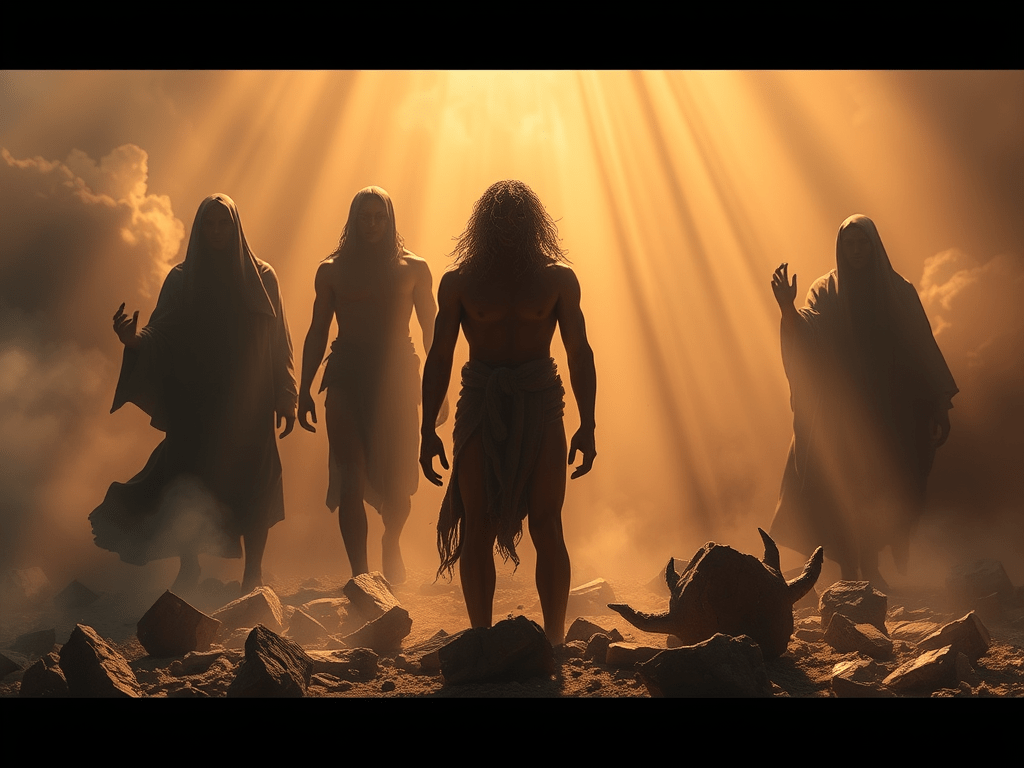
The phrase “born of a woman” is so ingrained in our understanding of human existence that it almost seems like an unshakable foundation. But when I start pulling at the threads, I realize the entire concept unravels into a paradox that defies simple categorization. If being born of a woman is the requirement for humanity, then what do we do with the first two humans who were, by all accounts, not born at all?
It’s unsettling, honestly. The deeper I dig, the more I realize that this paradox is staring back at me with an almost mocking challenge.
Can we even say that the first two were truly human?
If not, when did humanity begin? Was it the first child born from these two? But then—was this child the first human while its parents were… what, exactly?
A prototype? A different species?
The implications are staggering.
The First Born Human a Murderer
One thing that sticks with me is that in most creation narratives, the first recorded human birth is tied to tragedy. In the biblical account, Cain is the first human born of a woman, and his defining act is murder.
Why is the first human life born into the world also the first to take life away? The irony is maddening.
I can’t help but ask: where is the first female born of a human? The texts don’t say. We assume, by inference, that daughters must have been born, but the silence is loud.
What does it mean that history does not document her? If humanity hinges on birth, where is her record?
Or does history itself lean on a male-centric bias that erases her from the origin story?
Parallels
The more I dig into this, the more I realize that Genesis isn’t the only story that carries this strange paradox—humans who weren’t born in the way we understand but were still considered human. There are creation myths that predate Genesis, and many of them carry strikingly similar themes. Some of them even reinforce the very question that won’t let me go: if the first humans were not born of a woman, then what makes them human?
And more than that—why is the first human birth often marked by tragedy?
This pattern isn’t exclusive to the biblical Cain. In many older traditions, the firstborn human or godly child often becomes a figure of sorrow, destruction, or chaos. Almost as if there is something inherently cursed about being the first to enter the world through the process of birth rather than direct creation.
Mesopotamian Parallels
I keep coming back to the Atrahasis Epic, a Babylonian creation myth that predates Genesis by at least 1,000 years. It tells of the gods fashioning the first humans out of clay mixed with the blood of a rebellious god.
Think about that—the first humans are literally created from divine murder. And then, what happens?
Humanity becomes so problematic (overpopulated, noisy, unruly) that the gods try to destroy them with a flood. Sound familiar? It’s eerily close to the Genesis flood narrative.
The Sumerians have a similar story in the Enuma Elish, where humans are made from the blood of Kingu, a god who was slain in rebellion against the supreme deity Marduk. Again—humanity’s very essence is tied to violence, to death.
And it doesn’t stop there. The ancient Egyptian creation myth has Atum, the first god, essentially spitting or masturbating the first life forms into existence. No mother, no womb—just direct creation.
So now I’m seeing a pattern. Over and over, the first human-like beings are not born but made. And when humans finally are born, the first one tends to be a figure of murder, chaos, or suffering.
Why?
The Tragic Firstborn
The first human born of a woman in Genesis is Cain, and he becomes a murderer. That detail haunts me. Why does birth into the world seem to carry this burden?
Then I remember Raven in Norse mythology—the first human to be fully mortal rather than divine or half-divine. His role? He fails. He does not bring the glory of gods but the weakness of men.
In Hindu mythology, the first mortal humans are often the sons of the gods—figures like Manu, who must endure cycles of destruction and suffering. Manu himself is spared from a great flood (again, another parallel), but his descendants are doomed to mortality, suffering, and endless cycles of birth and death.
Even in Greco-Roman thought, there’s Pandora’s Box—which, while not about the firstborn human, plays a similar role. Pandora, the first woman in Hesiod’s myth, doesn’t bring life but destruction. Her very presence unleashes evil upon the world.
Why do these stories converge on the same idea? The first human, the firstborn, the first woman—they aren’t celebrated. They bring tragedy.
It’s almost as if being born itself is viewed as a fall from grace.
When “Humanity” Began
This brings me to modern science. What do we even mean by “the first human”? If I go down the evolutionary path, it’s not like a single Homo sapiens suddenly appeared from nothing.
There was no Adam and Eve in a literal sense.
Instead, it was a slow process, a transition—gradual mutations over thousands of years. But then… what was the first true human? At what point did a proto-human become self-aware? When did consciousness, moral reasoning, and the concept of “I am” first emerge?
And here’s where it gets eerie.
Anthropological studies suggest that early humans began engaging in ritual burial around 100,000 years ago. That means the first humans who were truly aware of themselves were also aware of death.
The First Real Marker
I can’t let go of this thought. The more I examine it, the more I realize that everything—our entire history, our consciousness, even our sense of meaning—hinges on a single, terrifying recognition: the awareness of death.
Think about it. Before the first humans could build civilizations, before they could contemplate the heavens or write down laws, they had to face one undeniable reality: things die.
But it’s not just that things die. Everything dies. And more importantly, I will die.
The first moment a human being grasped this—when it wasn’t just an instinct for survival, when it wasn’t just a reaction to danger but a deep, existential realization—was the moment humanity began.
Other animals survive. Other animals protect their young, flee from predators, fight to stay alive. But do they mourn? Do they look at another fallen member of their species and see themselves in that corpse? Do they weep for something they can’t control? Yes.
We do too.
This realization of mortality wasn’t just an observation. It wasn’t just knowing that things die. It was understanding the weight of it—the permanence of loss, the separation, the void left behind.
And maybe that’s why, in so many ancient texts, the first recorded human acts—whether creation stories, myths, or early historical writings—are often tied to murder, death, and grief.
Because maybe, to be human means more than just being alive. It means understanding that life is fragile, that it ends, and that this ending matters.
The Firstborn Killed
The biblical account of Cain and Abel has always disturbed me, but now I see it differently.
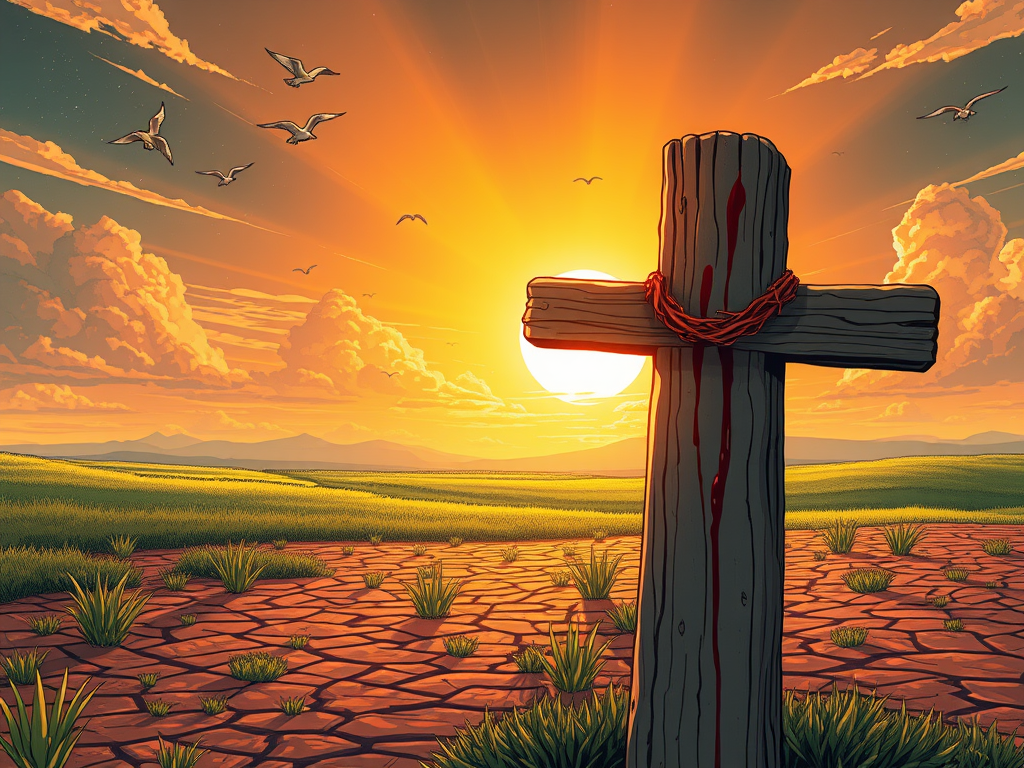
Cain isn’t just the firstborn of humanity. He’s also the first murderer. The first human ever born through the process of childbirth—the first to fully experience human existence in a way Adam and Eve did not—immediately becomes an agent of death.
It’s almost poetic in its cruelty.
Abel’s death wasn’t just a loss. It was a moment. A shift. A crack in the foundation of existence. Because, for the first time, death wasn’t just something that happened. It was something that could be caused.
This was a different kind of death. Not the slow decay of time, not a sickness or a natural predator—this was chosen death.
A human taking another human’s life.
And that changes the equation entirely.
It’s as if the moment Cain killed Abel, humanity saw itself clearly for the first time. We weren’t just creatures moving through the world anymore. We had the power to end another existence. To steal from the future. To unravel the story of another before it was finished.
Was this the true moment of awakening?
Cain’s punishment wasn’t merely exile—it was an existence where he could no longer be at peace. And I wonder if his real punishment wasn’t the mark God placed on him, but the knowledge of what he had done.
The knowledge that life could end by his own hands.
This is the turning point in human consciousness. The first time a human knew what it meant to lose something permanently—not just through the slow decay of nature, but by an irreversible act of their own making.
The First Humans Recognized Death
I keep turning this over in my mind.
It wasn’t when humans made fire, or when they built tools, or when they first painted their hands onto cave walls.
The real moment—the moment humanity truly became what it is today—was when we looked at death and understood it.
Not just instinctively avoiding it. Not just fearing predators or disease.
Understanding it.
This was the moment everything changed.
The moment when people first began burying their dead with rituals. When they marked graves. When they sat beside a lifeless body and realized that something—something essential—was gone forever.
This was the first great question.
Because when death became more than just a biological event, when it became a tragedy, when it became something that mattered, then suddenly, humanity had to ask:
What does it mean to be alive?
And isn’t that the real beginning of everything?
Our Entire Existence Hinges on This
This is what I keep coming back to. This is what won’t let me go.
All of human civilization—all philosophy, all religion, all storytelling, all art—is a response to this single realization.
We suffer.
We die.
We lose those we love.
And because we know this, we seek meaning.
The gods of every culture, the laws of every nation, the traditions of every people—they all come from this core truth.
What is justice, if not a way to make sense of human suffering?
What is faith, if not an answer to death?
What is art, if not an expression of loss and longing?
The fact that I can even ask these questions means that my existence isn’t just biological. It’s something more.
And this is where science, philosophy, and theology converge again.
- Science tells me that early humans became distinct when they started to care for their dead, when they began to mourn.
- Philosophy tells me that the ability to contemplate mortality is what separates us from other beings.
- Theology tells me that death itself is the moment where humanity realized its place in the cosmos.
All three point to the same undeniable truth:
Humanity is defined not by life, but by the awareness of its limits.
And that realization—the recognition of suffering, of life’s fragility, of loss—isn’t just an unfortunate side effect of being human.
It is the very foundation of it.
Analytical Repose
So where does that leave me?
If I follow this line of thought to its logical conclusion, I have to accept something both unsettling and profound.
Humanity did not begin with life.
It began with the recognition of death.
The first human was not the first to be born.
The first human was the first to understand loss.
And that means we are not merely defined by our ability to think, to build, to communicate, to create.
We are defined by our ability to grieve.
To recognize that something is missing. To feel its weight. To ask why.
And perhaps, to seek something beyond it.
Because once you know that life is fragile, that it can end, that you can lose it or lose someone else—you have a choice.
You can live in fear of that truth.
Or you can find meaning in it.
And maybe… just maybe…
That’s what makes us human.
Humanity by Decree, Not Birth
And now I come back to my original question. If all these myths, all these scientific markers, all these ancient stories tell me that the first true humans were not born but made—then I am left with only one conclusion.
Humanity is not biological.
It is bestowed.
Whether by divine decree or by an evolutionary leap into self-awareness, humanity is not just about birth. It’s about something granted—something beyond process, beyond genetics.
And this means…
The first two weren’t human because they were born.
They were human because something higher declared them to be so.
The Biggest Problem
This is where the contradiction truly becomes impossible to ignore. If humanity requires birth from a woman, then the first two figures—Adam and Eve, or whatever equivalent one uses in a scientific or mythological framework—do not qualify. And yet, we call them human.
They were created rather than born.
This means the very definition of humanity is, at its core, supernatural—or at least, transcendent. Something, someone, a force beyond natural birth, declared them to be human. This, to me, is the inescapable logic. If the first two were not born, then the very existence of humanity is not contingent on the reproductive process but on something else entirely.
And what else could that be except the declaration of a higher intelligence? A Creator?
Evolution may offer a slow progression of life forms, but even then, where does sentience emerge? Where does the point of personhood begin?
Science, philosophy, and theology all converge on this single issue: we recognize something as human not because of its biological process but because of a categorical distinction, an identity granted beyond mere physiology.
That idea alone is staggering.
The Convergence
I can’t stop thinking about it. The deeper I go, the more I realize that science, philosophy, and theology—three domains that usually stand at odds—are all pointing toward the same unavoidable truth: humanity is not just a biological fact. It is a bestowed identity.
This idea is staggering because it disrupts everything. We assume that being human is simply a matter of species classification, of DNA markers that differentiate us from other primates. But if that were the case, where do we draw the line between human and not human? What moment, what event, transforms a being from an animal into something more?
The only answer that makes sense is that humanity is a distinction that is conferred, not simply inherited.
And when I see how this conclusion emerges independently from three entirely different perspectives—science, philosophy, and theology—I realize I’m staring at something foundational, something I cannot escape.
Science: The Gradual
Science tells me that humanity did not begin with a single individual, but as a gradual process. The first anatomically modern humans appeared around 300,000 years ago, but what made them different from their predecessors? When did a being that looked human actually become human?
It wasn’t about biology alone. The real markers of humanity are things like:
- Symbolic thinking (cave paintings, rituals)
- Burial of the dead (awareness of mortality, respect for the deceased)
- Language and abstract reasoning
None of these things can be observed in fossils. They are not encoded in genetics. They are ideas, concepts, distinctions.
And that’s when it hits me: humanity is not about the body. It’s about the recognition of self and the ability to recognize others as more than just organisms.
So science, which is supposed to be purely physical, ends up saying something profoundly metaphysical—being human is not just a biological process, but an existential transition.
Philosophy: Self-Recognition
Philosophy complicates things even further. Thinkers like René Descartes, Immanuel Kant, and even existentialists like Sartre have wrestled with the idea of what it means to be human.
Descartes gives me the infamous cogito, ergo sum—“I think, therefore I am.” And I wonder, was the first true human the first being to think about itself?
Kant takes it further. He argues that human dignity is rooted in rationality and moral agency—our ability to reason, to act with purpose, to assign meaning beyond mere survival.
And then I come to Sartre, who tells me that existence precedes essence—that humans are not born with a pre-defined identity, but instead create it. This idea shakes me. It suggests that humanity is not something we are born into, but something we step into.
I have to sit with that for a moment.
If philosophy is right, then the moment humanity truly began was not at birth, not in the womb, not in the arrangement of genetics—but in the moment a being first asked, “What am I?”
That thought alone feels like a kind of Genesis moment. A becoming.
Theology: Decree
And here’s where everything collides.
In theological creation narratives, the first humans are not born. They are declared. In Genesis, Adam is formed from the dust and God breathes life into him. His humanity is not biological—it is given by a higher authority.
This pattern repeats across mythologies. The Enuma Elish, Atrahasis, Norse creation myths—all of them depict the first humans as crafted, not born. And even in Hindu thought, where human cycles of birth and rebirth dominate, the first humans come into being through divine intention.
So now I see it.
Theology has been saying for thousands of years what science and philosophy are only now confirming.
Humanity is something beyond the body. It is something recognized, something conferred.
The Single Converging
I sit with all this information, and my mind keeps circling back to the unavoidable conclusion.
If science tells me that humanity is about awareness…
If philosophy tells me that humanity is about self-recognition…
If theology tells me that humanity is about divine declaration…
Then all three are saying the same thing in different ways.
To be human is to be recognized as such.
And that is what stuns me. Because it means humanity is not merely a biological condition—it is a relationship. It is something granted by an external recognition. Whether that recognition comes from another human (as philosophy suggests), from our awareness of mortality (as science suggests), or from a Creator (as theology suggests), the result is the same.
I am not human because I was simply born that way.
I am human because something, someone, some force—be it the self, society, or God—has declared it to be so.
The First Two Humans
And now I come full circle, back to where I started.
If being human is about recognition, then the first two humans—whether mythological or evolutionary—were not born human. They were made human. They were given an identity, a distinction, a status beyond mere existence.
And that means humanity itself is an intentional thing. Not an accident. Not an emergent property of cells and neurons.
A distinction.
A moment.
A decree.
And I don’t know what to do with that thought yet. It’s too big. Too vast.
But one thing I do know.
Whatever humanity is… it is not just a biological process. It is something more.
The Thought That Won’t Let Me Go
I keep circling back to this question, and no matter how I try to pin it down, it keeps shifting, like a paradox wrapped in layers of contradiction.
If I take the premise at face value—that being born of a woman is what defines humanity—then Adam and Eve, or the first sentient beings, were not human. But that’s absurd. Everything in me resists that conclusion.
Maybe the real problem is that our language and categories are too rigid. Maybe “human” is not just a biological designation but a state of being, something bestowed, not merely inherited. And if that’s true, then the first two weren’t human by process, but by decree.
And that means humanity itself is not an accident. It’s intentional.
The implications of that thought make my head spin.
Appendix of References
Genesis 4:1–2 (ESV)
“Now Adam knew Eve his wife, and she conceived and bore Cain, saying, ‘I have gotten a man with the help of the Lord.’ And again, she bore his brother Abel.”
Genesis 2:7 (ESV)
“Then the Lord God formed the man of dust from the ground and breathed into his nostrils the breath of life, and the man became a living creature.”
1 Corinthians 15:45 (ESV)
“Thus it is written, ‘The first man Adam became a living being’; the last Adam became a life-giving spirit.”
Ecclesiastes 3:19–20 (ESV)
“For what happens to the children of man and what happens to the beasts is the same; as one dies, so dies the other… All go to one place. All are from the dust, and to dust all return.”
Genesis 6:5–6 (ESV)
“The Lord saw that the wickedness of man was great in the earth… And the Lord regretted that He had made man on the earth, and it grieved Him to His heart.”
Lamentations 3:39 (ESV)
“Why should a living man complain, a man, about the punishment of his sins?”
Job 14:1–2 (ESV)
“Man who is born of a woman is few of days and full of trouble. He comes out like a flower and withers; he flees like a shadow and continues not.”
Psalm 8:4–5 (ESV)
“What is man that You are mindful of him, and the son of man that You care for him? Yet You have made him a little lower than the heavenly beings and crowned him with glory and honor.”
Hebrews 2:14–15 (ESV)
“Since therefore the children share in flesh and blood, He Himself likewise partook of the same things, that through death He might destroy the one who has the power of death… and deliver all those who through fear of death were subject to lifelong slavery.”
Psalm 90:12 (ESV)
“So teach us to number our days that we may get a heart of wisdom.”
Genesis 3:19 (ESV)
“By the sweat of your face you shall eat bread, till you return to the ground, for out of it you were taken; for you are dust, and to dust you shall return.”
Key Mythological Parallels
- Atrahasis Epic (Babylonian): First humans created from clay and the blood of a slain god; humans become too noisy, prompting a divine flood.
- Enuma Elish (Sumerian): Humanity formed from Kingu’s blood, a god who rebelled and was slain.
- Greek Mythology: Pandora, the first woman, releases suffering into the world.
- Hindu Mythos: Manu survives a flood and becomes the progenitor of modern humans.
- Egyptian Creation: Atum creates life from himself—no birth, only divine emanation.
Philosophical Anchors
- Descartes: Cogito ergo sum—“I think, therefore I am.”
- Kant: Humanity is defined by rational autonomy and moral law.
- Sartre: “Existence precedes essence.” We become human by creating our identity.
Scientific Thresholds
- Homo sapiens emergence: ~300,000 years ago (anatomical)
- Symbolic behavior: ~100,000 years ago (burials, art, tools)
- Cognitive revolution: ~70,000 years ago (self-awareness, language, culture)

Leave a comment